
Resolution 10-NQ/TW redefines foreign capital attraction
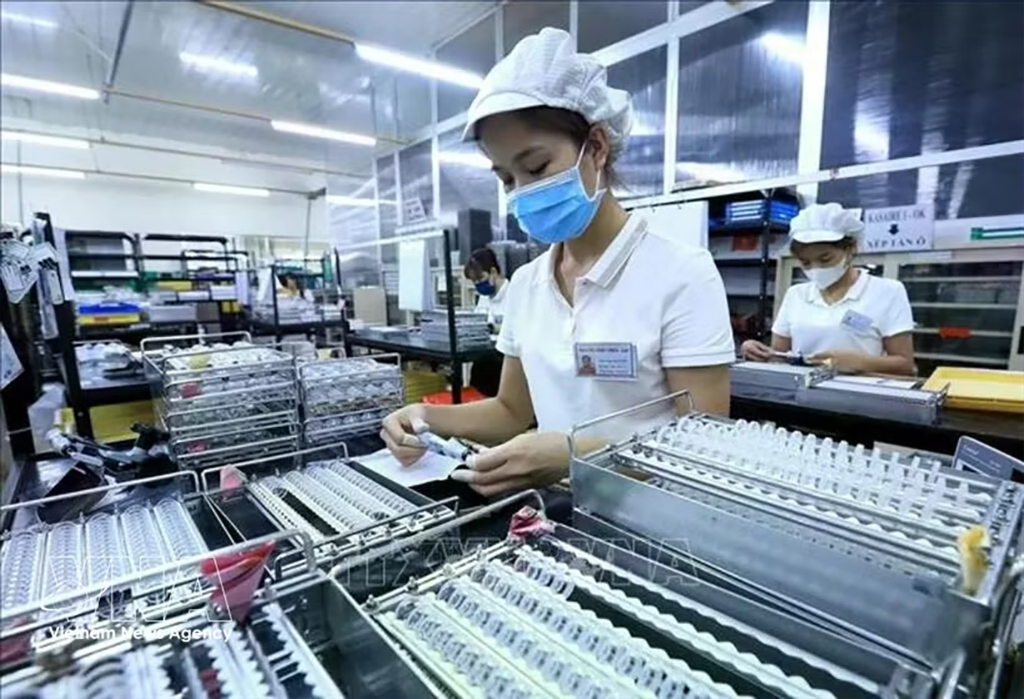
The Politburo has issued Resolution 10-NQ/TW, a document that promises to rewire the way Vietnam courts and controls foreign capital.
Many experts call it a sweeping reform agenda, touching everything from laws to policy management, and most notably, a fundamental shift away from fragmented, locality-driven investment strategies.
Flexible financial support tools take priority
According to Prof. Dr. Hoang Van Cuong, Vice Chairman of the Vietnam Economic Science Association and former Vice Rector of the National Economics University, the global minimum tax has blunted the appeal of traditional corporate income tax breaks, making post-investment financial support mechanisms the new battlefield for retaining strategic investors.
To hold foreign-invested enterprises accountable without hurting Vietnam’s business climate, Cuong said priority should go to direct financial support schemes based on actual spending on research and development (R&D) and technology application.
Such mechanisms would ensure state funds flow only when foreign capital generates genuine scientific, technological and added values inside Vietnam. That would favour projects that deliver innovation and technology transfer over those focused solely on processing and assembly. Support policies should also target workforce training and building of domestic supply chains.
For projects committed to eco-friendly technologies and Environmental, Social and Governance (ESG) standards, the State could offer interest rate subsidies through credit institutions or allow accelerated depreciation of green and digital assets. These incentives, however, should come with rigorous post-audit checks, including clawbacks if enterprises waste energy or cause environmental harm, he said.
Cuong noted that the FDI sector already dominate key industries such as manufacturing and electronics, accounting for about 70% of Vietnam’s total exports. The next step, he said, is to grow domestic corporations capable of absorbing advanced management know-how and turning external resources into home-grown muscle.
To achieve this, he proposed the use of targeted state procurement that assigns major missions to domestic conglomerates, creating large-scale markets and opportunities. In parallel, the State should allocate resources to acquire critical technologies that serve Vietnam’s long-term strategic autonomy, ensuring the country keeps a leading hand in development cooperation.
Rolling out red carpet for global tech headquarters and R&D
Resolution No. 10-NQ/TW said indirect investment inflows, such as capital contributions, mergers and acquisitions by global investment funds, financial institutions and foreign investors, remain a fraction of what the market could absorb.
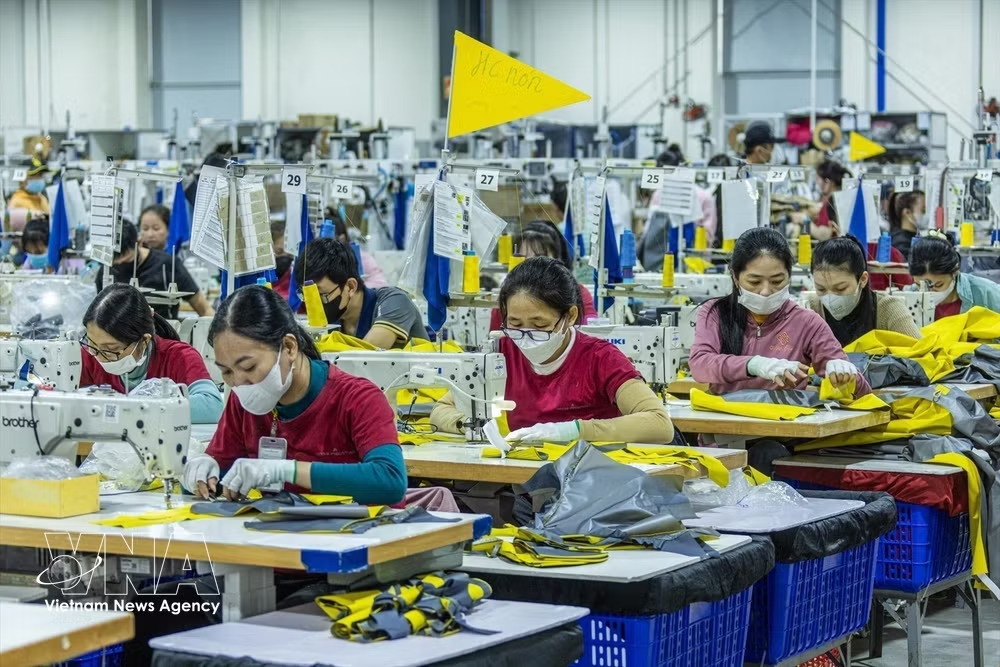 FDI projects in Quang Ngai province create jobs and generate income for local workers. (Photo: VNA)
Dr. Pham Sy An, Deputy Head of the Finance and Scientific Management Department at the Vietnam Academy of Social Sciences, pointed to market access restrictions and transaction mechanisms as key obstacles. Existing regulations, including requirements that investors hold the full amount of capital before placing orders, considerably raise opportunity costs for international investment funds.
Moreover, foreign ownership caps at many big companies have starved the market of quality investable assets. Exit mechanisms and financial risk-hedging instruments remain underdeveloped. When risks that can’t be priced through conventional valuation models, international institutions either demand higher risk premiums, stretch due diligence, or walk away from deals entirely.
Inconsistent information transparency and corporate governance standards further complicate due diligence. Meanwhile, the scale and structure of products in Vietnam’s capital market lack the diversity that major financial institutions require.
Expanding the supply of investable securities means faster equitisation of state-owned enterprises tied to stock market listings, and a firm push for private companies to go public, he said.
Luring global tech giants to set up regional headquarters and R&D centres in Vietnam, and persuading them to share core knowledge, will demand a profound overhaul in governance thinking and research cooperation mechanisms. R&D grants should be judged on patents filed, commercialisation prospects, and the depth of collaboration with domestic firms.
Research partnerships between foreign investors and Vietnamese universities need a sturdy legal framework that spells out intellectual property co-ownership, confidentiality rules, and stiff penalties for breaches.
An expects to see an innovation ecosystem model, where regulators carve out experimental zones in hi-tech parks and innovation centres rather than hoping for one-way technology transfers that rarely materialise with cutting-edge know-how.
Finally, An said disbursement criteria must be transparent, stable and predictable. All support conditions, measurement standards and recovery rules should be quantified clearly from the investment licensing stage. Appraisals should run through an integrated National Investment One-Stop Portal to trim compliance costs.
When financial support tools are adopted transparently, professionally and equitably, Vietnam’s investment climate will look a lot more enticing to multinationals for the long haul, he added./.

Tin cùng chuyên mục