
Ninh Binh mobilises resources to develop synchronised, modern transport infrastructure
Alongside accelerating the implementation of projects, the province is focusing on improving the efficiency of public investment, making effective use of land resources and attracting private capital, thereby laying a solid foundation for Ninh Binh to become a centrally-governed city.
Roads shaping new development space
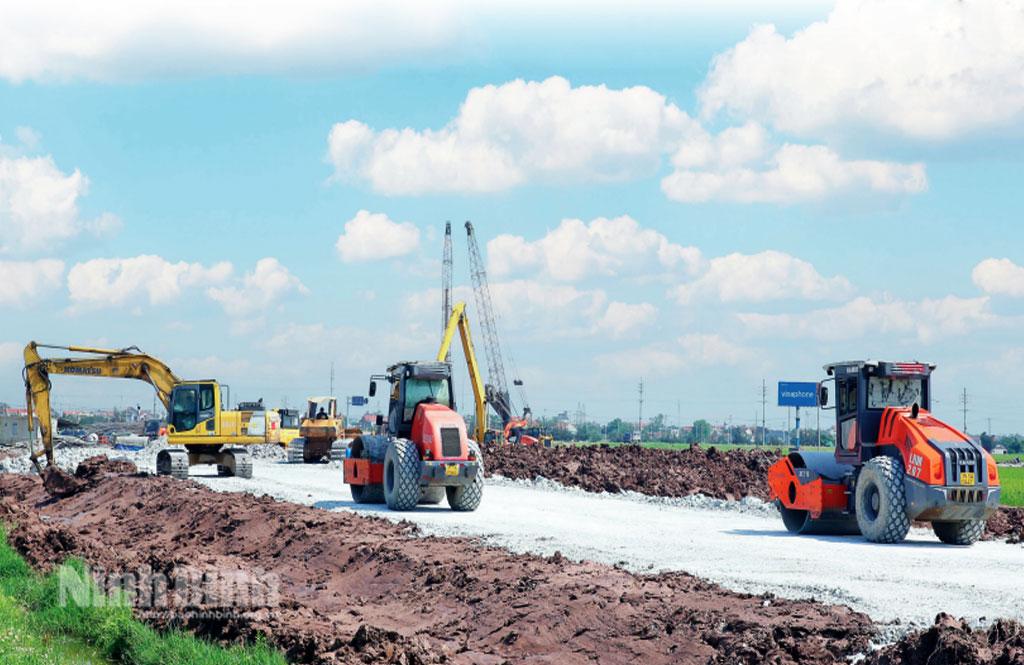
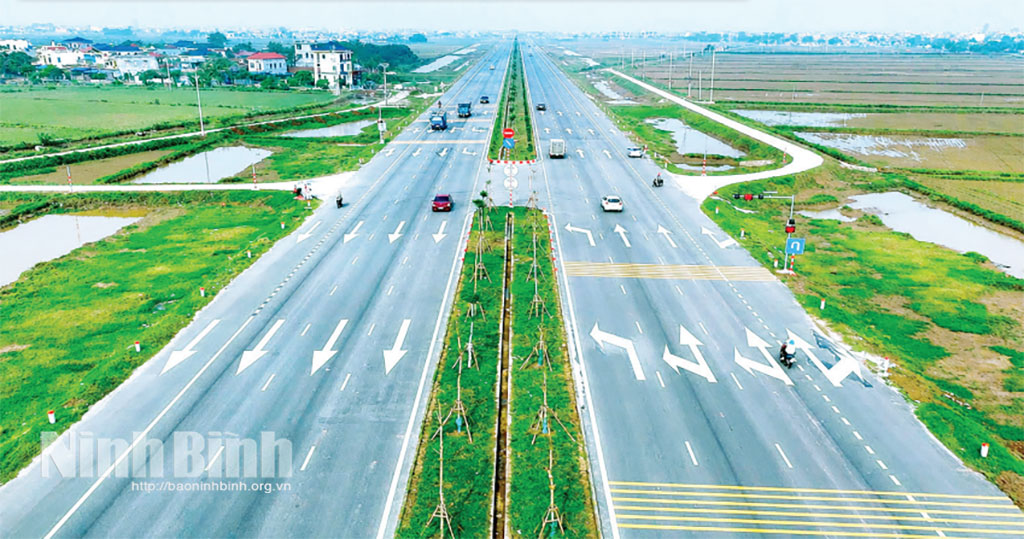
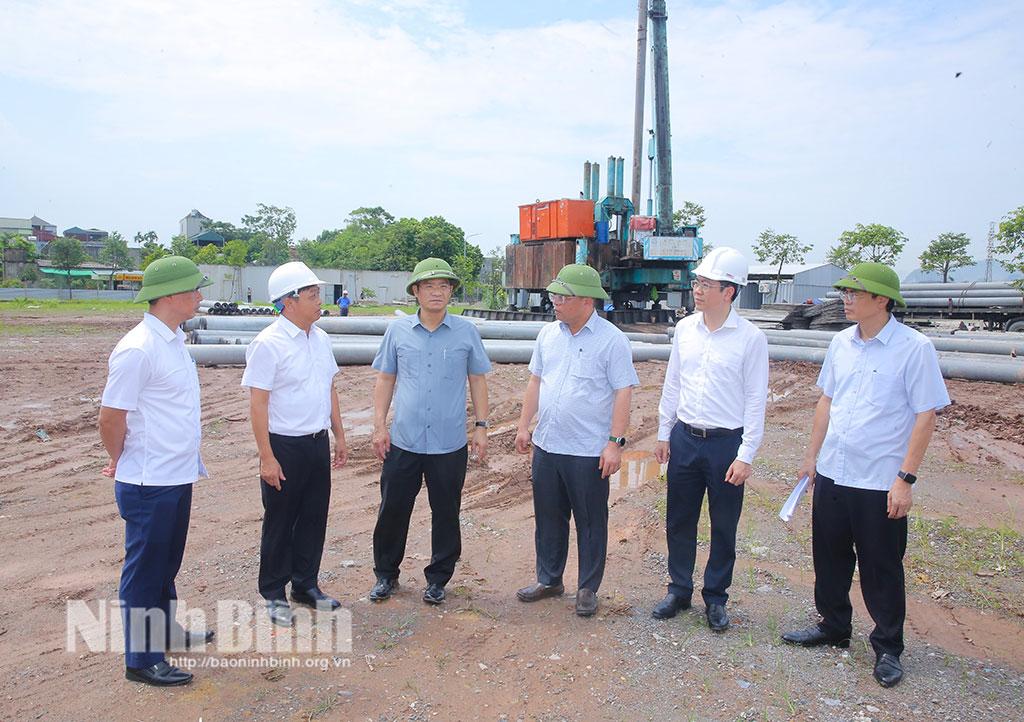
On the handed-over sections of the project to build an inter-regional road connecting the southern Red River Delta with the Northwestern mountainous region and the northern-central coastal region (Phase I), seven construction sites are currently working on the road section.
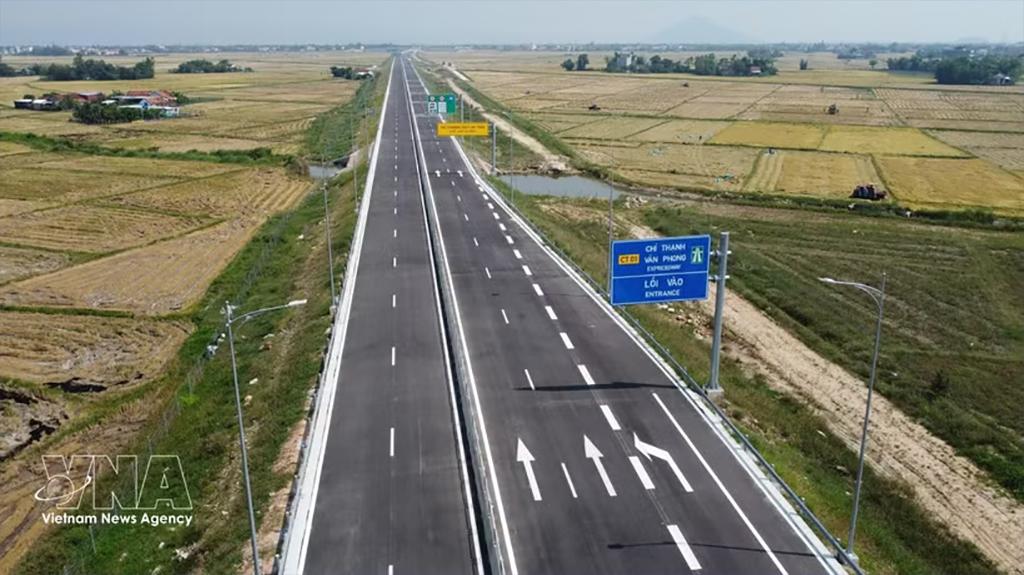
The 32.366-km road runs through the communes of Binh Minh, Dinh Hoa, Lai Thanh, Yen Mac and Dong Thai, as well as Trung Son and Tam Diep wards. Designed to meet Grade-II plain road standards, the project has a total investment of 6.94 trillion VND funded by the provincial budget.
The project includes eight bridges, 12 interchanges, one underpass for local residents, traffic safety facilities, drainage systems, lighting systems and landscaping.
Nguyen Dinh Duc, Director of the Ninh Binh Provincial Construction Investment Project Management Board No. 1, said that immediately after the project was approved, the board worked with relevant departments, agencies and localities to complete investment procedures, design documents, contractor selection and site clearance.
As of July 21, 2026, local authorities had handed over 23.64 km of site clearance, equivalent to 73.1% of the total route length. More than 4 trillion VND had been allocated, with cumulative disbursement exceeding 2.66 trillion VND.
The remaining work is now focused on building resettlement areas, relocating technical infrastructure and completing site handovers.
To strengthen connectivity between the province's two major urban centres following the administrative merger, Ninh Binh is preparing to invest in the Hoa Lu-Nam Dinh strategic arterial road.
The project comprises a main route of approximately 21 km, a 12.2-km Ring Road No. 2 and connecting branch roads, with total investment estimated at 13.85 trillion VND from the central and provincial budgets.
The road is expected to provide a direct connectivity between Hoa Lu and Nam Dinh urban centres, shortening travel distances between administrative, commercial and service areas of the province following the merger.
Through interchanges with national highways, expressways and the ring-road network, the project will improve access to industrial parks, urban areas, education and healthcare centres, as well as tourism destinations.
It will also serve as a key transport axis for reorganising urban space along the Day River, distributing economic activities between the province's two development poles and easing pressure on existing roads.
Across the province, a series of key transport projects are now being implemented at an accelerated pace.
In the first seven months of 2026, locally managed State budget-funded investment was estimated at 19.97 trillion VND, up 3.9% year-on-year and equivalent to 45.9% of the annual plan.
The figure reflects efforts by authorities at all levels and relevant agencies to accelerate major projects and improve urban technical infrastructure in the province's three key development areas.
Developing infrastructure for a future city
Amid the demand for rapid and sustainable development and the goal of making Ninh Binh a centrally-governed city before 2030, the Provincial Party Committee's Standing Board issued Resolution No. 11-NQ/TU at the beginning of the year on developing the province's infrastructure in a synchronised and modern direction.
The Plan No. 07/DA-UBND, dated June 18, 2026, on building Ninh Binh into a centrally-governed city before 2030 also clearly defines a spatial development model featuring one strategic development axis, two development poles, three development centres, four economic zones and five economic corridors.
Each area is oriented toward leveraging its own strengths while being integrated into the province's overall development space. Road, rail, inland waterway and maritime transport networks will serve as the backbone connecting the different development areas.
The province is currently overseeing 43 key projects and works, including five projects being implemented by central ministries and agencies in the locality, 17 key provincial public investment projects and 21 non-budget-funded projects.
This structure clarifies the role of each source of capital. State budget resources are prioritised for backbone infrastructure, connectivity projects and works serving broader public interests, while non-budget capital is being mobilised for urban, industrial, energy and service-sector development.
To ensure effective implementation, the province is applying the "five clear" principle: clear responsibility, clear tasks, clear timelines, clear outcomes and clear authority.
Alongside speeding up projects already under construction, Ninh Binh is preparing a number of projects with long-term strategic significance.
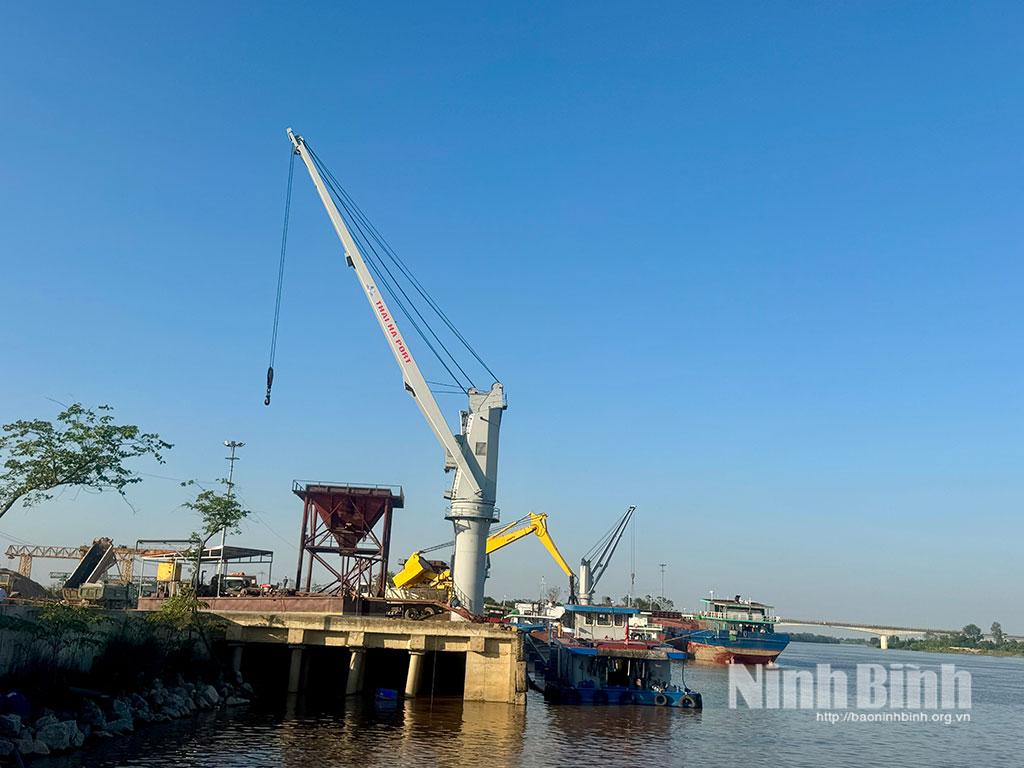
The master plan for a deep-water seaport has been completed, while research into an international airport plan is continuing. The province is also considering investment in a scenic road combined with embankments along both banks of the Day River, as well as the restoration and utilisation of ancient river channels, linking waterway transport with urban renewal, landscape conservation and tourism development.
Developing synchronised and modern infrastructure, with a focus on strategic connectivity, remains a consistent long-term priority for Ninh Binh following the administrative merger.
The province is therefore prioritising the completion of backbone infrastructure and strengthening connections among localities within the province and with the Red River Delta, the Hanoi Capital Region, the northern coastal region and the rest of the country.
Building on strategic transport axes and coastal routes, economic corridors as well as urban, industrial and service areas will gradually take shape, helping Ninh Binh fulfill the criteria for becoming a centrally-governed city by 2030./.
Tin liên quan
Preserving traditional sedge-thatch houses in Ninh Binh



Ninh Binh strengthen friendly cooperation with Oudomxay
Ninh Binh mobilises resources to support disadvantaged students
Tin cùng chuyên mục