
Reviving silk value chain and building Hoa Lu silk brand
Beyond creating sustainable livelihoods for local residents, the revival of the silk value chain is helping establish Hoa Lu silk as a distinctive cultural and economic brand.
Preserving the soul of a traditional craft village
For generations, Ha Trao was renowned for its mulberry fields, silkworm farming, silk reeling, and weaving traditions. However, market pressures and rapid industrialisation once pushed the centuries-old craft to the brink of decline.
Yet the spirit of the village endured through artisans and residents determined to preserve their ancestral heritage. Refusing to let the traditional craft disappear, local people embarked on an ambitious journey to revive the industry.
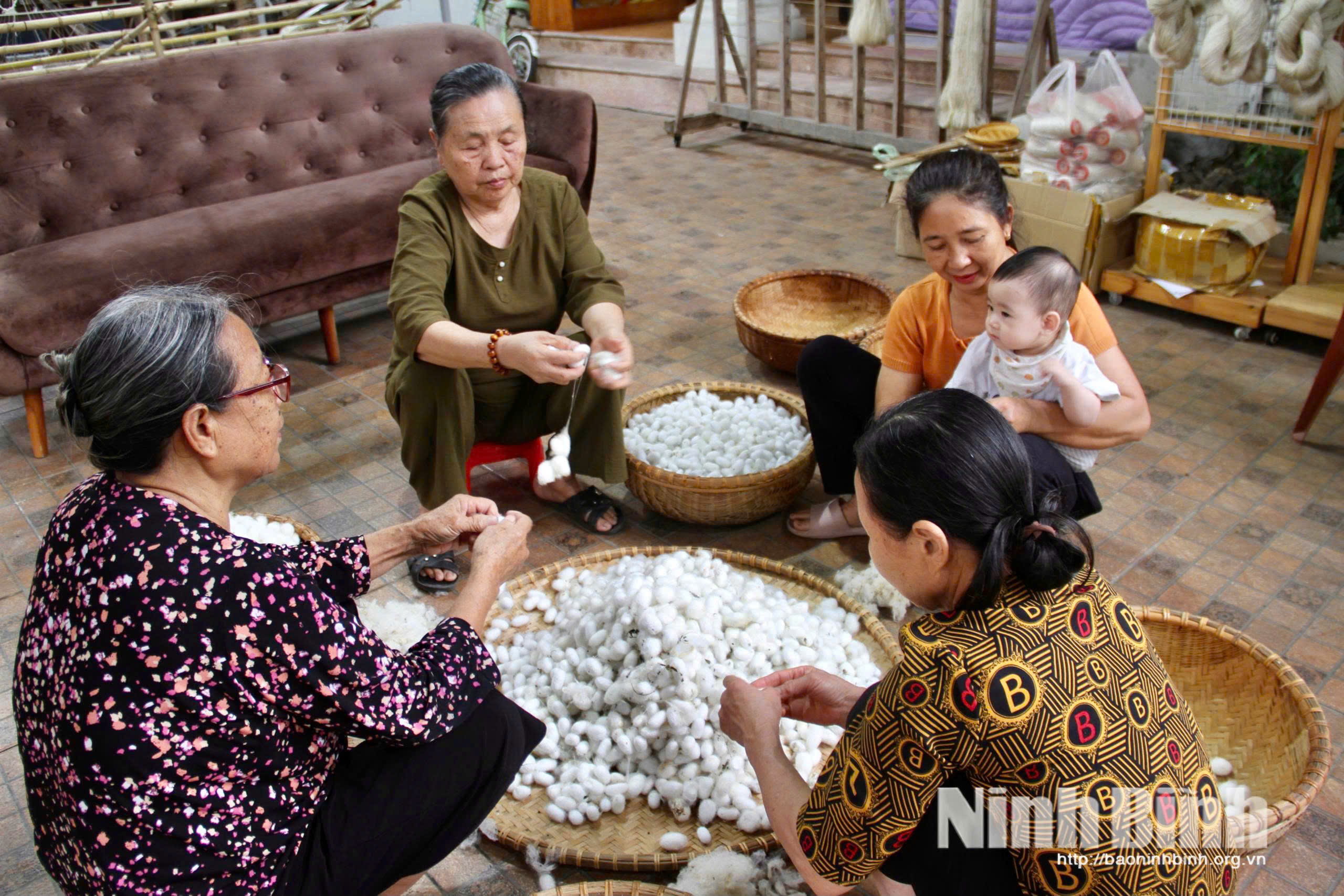
A major turning point came in 2025 with the establishment of the Hoa Lu Silk Weaving and Embroidery Cooperative. Founded by around 20 members, the cooperative operates a closed-loop production model covering the entire process, from mulberry cultivation and silkworm rearing to silk reeling, weaving, product display, and export.

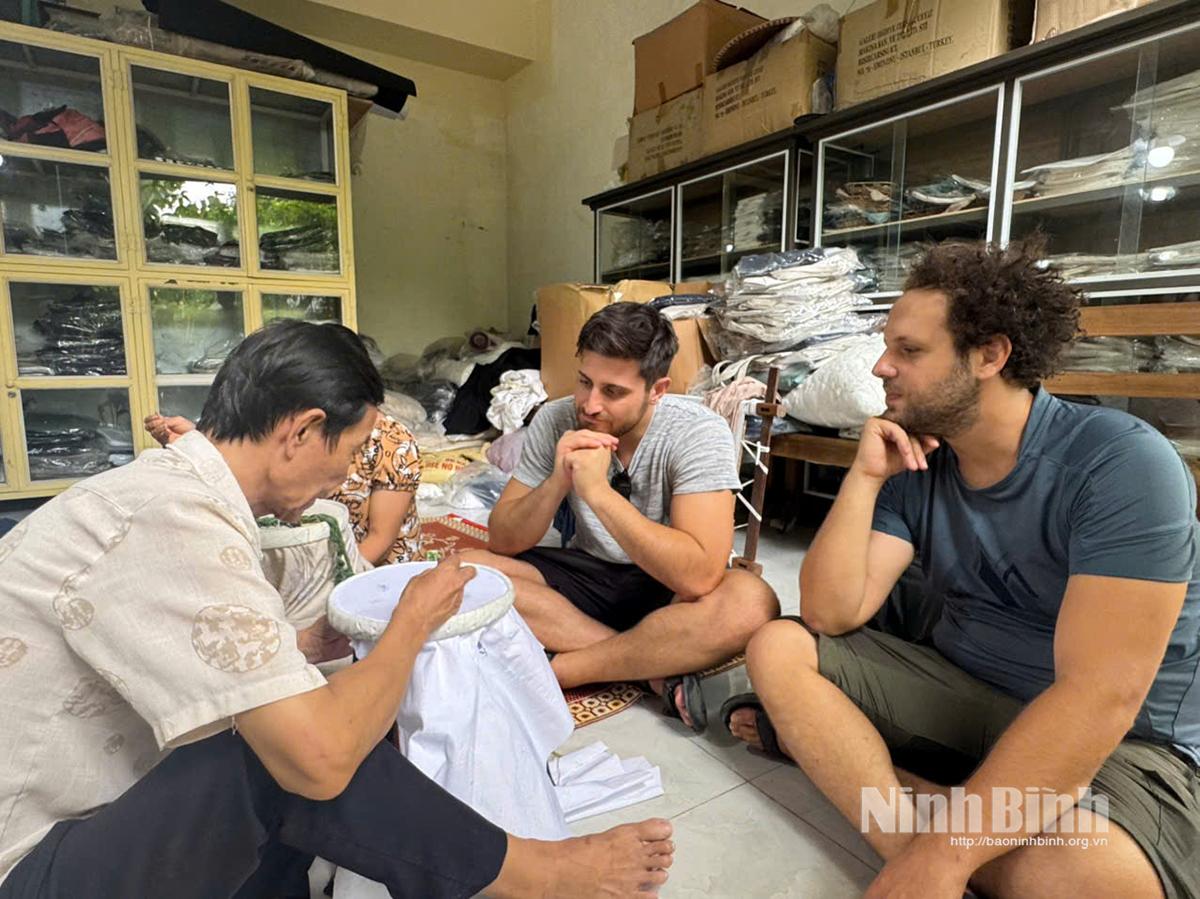
Bui Thi Bon, a resident of Ha Trao who has been involved in the trade since childhood, said she learned silkworm care and silk production techniques from her parents at an early age. Watching the traditional craft decline over the years was a source of deep concern for many long-time artisans.
Today, she is proud to return to the profession and pass on her knowledge to younger generations.
“This is not only a livelihood but also a way of preserving the heritage handed down by our ancestors,” she said.
Recognising that the future of Hoa Lu silk depends on a new generation of skilled workers, the cooperative has organised vocational training courses for local residents. The model brings together veteran artisans and young trainees, ensuring the transfer of traditional knowledge and techniques.
After completing training in silkworm farming, silk reeling, and weaving, participants are supported with flexible home-based employment opportunities. The cooperative purchases all finished products, creating stable incomes while encouraging young people, women, and older residents to remain engaged in the local craft economy.
The cooperative currently provides jobs for more than 30 workers, with average monthly incomes ranging from 7 - 9 million VND.
Positioning Hoa Lu silk brand
The effort to build the Hoa Lu silk brand from its roots in Ha Trao represents a proud revival of a historic craft tradition. More than a premium handicraft product, the brand has become a symbol of the resilience and enduring cultural heritage of the ancient Hoa Lu capital.
Nguyen Toan Thang, Deputy Director of the Hoa Lu Silk Weaving and Embroidery Cooperative, said the cooperative currently manages more than 5,000 sq.m of mulberry cultivation.
Operating under a closed production process, the cooperative produces approximately two tonnes of silk each month, supplying high-quality materials to both domestic and international markets. Annual revenue is estimated at between 8 - 10 billion VND.
According to Thang, the cooperative’s success is the result of a carefully planned development strategy. The first step involved restoring clean mulberry-growing areas and reorganising production. This is followed by preserving traditional craftsmanship while maintaining strict quality control throughout silk reeling, spinning, weaving, and natural dyeing processes.
As a result, each piece of fabric produced in Ha Trao reflects meticulous craftsmanship, featuring naturally derived colours and the distinctive sheen of pure silk.
Rather than competing with low-cost industrial silk products, the cooperative has positioned itself in the premium market segment, producing exclusive, high-quality silk for luxury fashion brands and international customers.
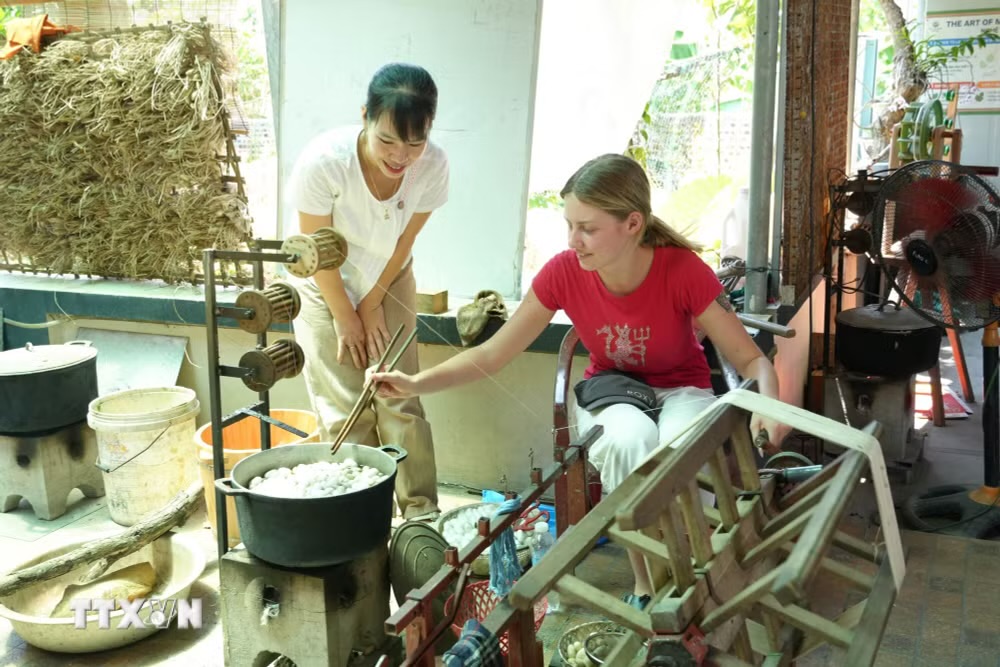
A distinctive feature of the model is its integration of production and tourism. Visitors can participate directly in activities such as harvesting mulberry leaves, feeding silkworms, observing silk reeling, and experiencing traditional weaving techniques.
The cooperative currently welcomes more than 1,000 visitors each month, with international tourists accounting for approximately 80% of arrivals.
Do Quyen, a cooperative member, said the initiative aims to create a community-based ecosystem that extends beyond business development.
“By building a strong local ecosystem, we are preserving the essence of our traditional mulberry and silk-making heritage while creating a solid foundation for promoting the Hoa Lu silk brand,” she said.
Pham Thi Thu Hien, Chairwoman of the Nam Hoa Lu Farmers’ Association, said the model not only safeguards cultural heritage but also addresses livelihood challenges and contributes to local economic development.
The association plans to continue supporting the cooperative through production expansion, equipment upgrades, tourism skills training, and efforts to attract more farmers to participate in the industry.
For Ha Trao, preserving a traditional craft does not mean preserving the past unchanged. Instead, it means breathing new life into a centuries-old heritage. Today, the village’s golden silk threads are weaving together a distinctive cultural and agricultural brand, helping carry the legacy of Hoa Lu onto the international heritage map./.
Tin cùng chuyên mục

Muong Lo Festival 2026 opens with grand Xoe dance performance
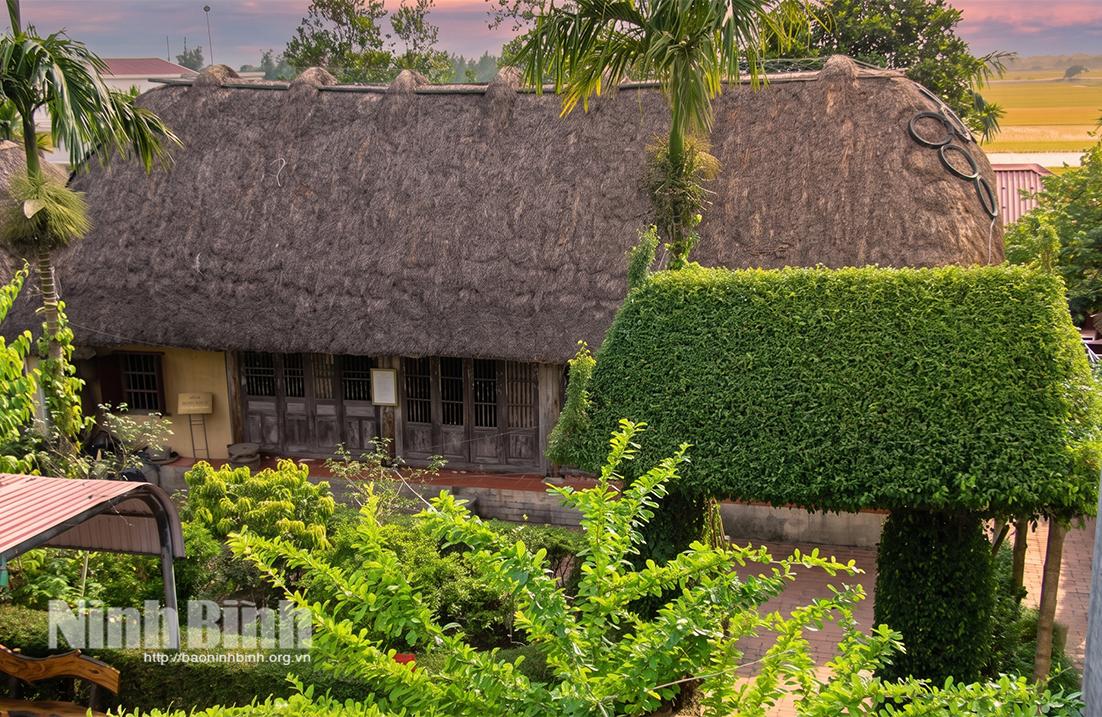
Preserving traditional sedge-thatch houses in Ninh Binh