
Ninh Binh steps up efforts to protect endangered Delacour’s langur
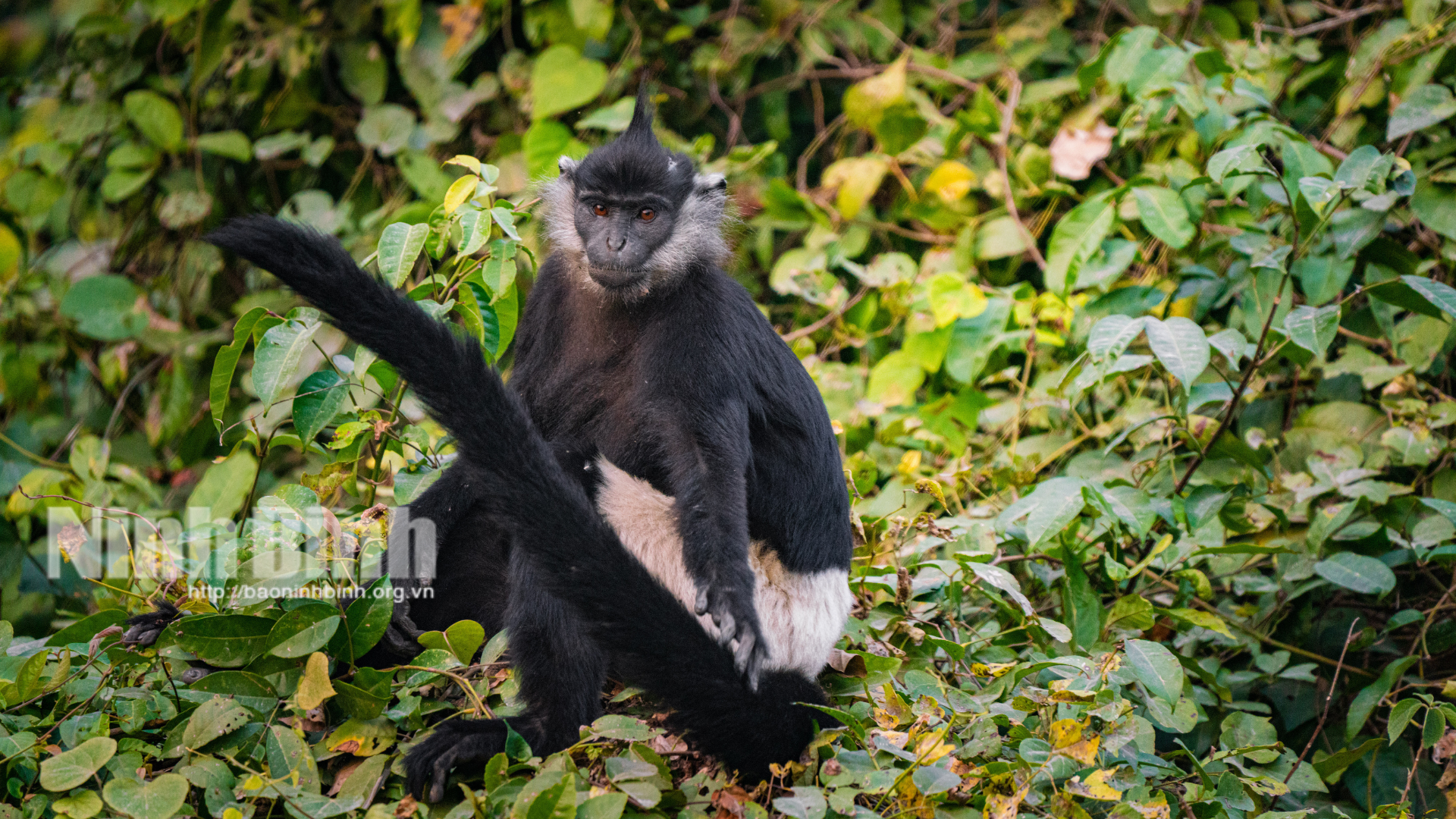
This was among the key points emphasised by experts at a recent workshop to assess the outstanding universal values and directions for developing the nomination dossier for the World Heritage Site of the Van Long Kim Bang Tam Chuc Delacour’s Langur Cultural-Ecological Landscape.
Threats to an iconic primate
At the workshop, hosted by Ninh Binh Province in coordination with the Ministry of Culture, Sports and Tourism, the UNESCO Office in Viet Nam, research institutions, and experts, a report on the species’ current status by the Centre for Conservation of Nature and Development (CCD) drew particular attention.
According to experts, the Delacour’s langur (Trachypithecus delacouri) is an endemic primate restricted only to a limited area of northern Viet Nam. The species is classified as critically endangered (CR) on the IUCN Red List and receives the highest level of protection under Vietnamese law.
A CCD survey conducted during 2022 2025 found that around 81 82 groups, comprising 562 570 individuals, remain in five of the seven surveyed areas. The three largest populations are concentrated in the Van Long Dong Tam, Kim Bang Tam Chuc and Yen Mo Tam Diep areas. In addition, eight reintroduced individuals are living in the Trang An World Heritage Site, while the Endangered Primate Rescue Centre (EPRC) is caring for 19 individuals.
Following the administrative reorganisation in 2025, around 95% of all Delacour’s langurs are concentrated in Ninh Binh, making the species a symbol of the province’s efforts to conserve biodiversity.
Protecting the Delacour’s langur not only helps prevent its extinction but also preserves limestone ecosystems, maintains habitat connectivity, and promotes sustainable development models.
However, pressures on the species’ habitat remain severe. Signs of hunting and trapping continue to be recorded in all areas inhabited by the langurs, leaving them vulnerable to traps even when they are not the intended targets.
Long-standing limestone quarrying for the cement industry in Kim Bang and Yen Mo has caused severe habitat degradation. Satellite imagery analysis estimates that around 31% of the Kim Bang limestone mountain massif has been excavated, while another review found that approximately 52% of the broader landscape has been lost.
In Yen Mo and Dong Tam, habitats are also degraded by agricultural activities, waste dumping, settlement expansion, and livestock grazing, reducing vegetation cover and increasing competition for food resources. Habitat fragmentation also increases the risks of inbreeding and genetic decline within these isolated populations.
Urgent solutions and a sustainable vision
The situation in Van Long shows that long-term strict protection has demonstrably increased the Delacour’s langur population. In Kim Bang and Huong Son, CCD initiatives since 2018, including population monitoring, community patrols in coordination with forest rangers, awareness-raising, and threat response, have helped sustain reproductive rates and restore populations.
According to CCD, the immediate priority is to maintain permanent protection forces in all langur habitats, including Kim Bang Tam Chuc, Huong Son Lac Thuy, Yen Mo Tam Diep, Thanh Bong (Nho Quan, Ninh Binh), and Pu Luong (Thanh Hoa).
These teams require training in data management software, species identification, trap removal, evidence collection, animal first aid, and procedures for reporting violations.
Regarding limestone quarrying, no new licences should be issued and no existing mines should be expanded within the boundaries of the Kim Bang Nature Reserve, core habitat areas, and connecting areas.
Active mines must face strict monitoring of boundaries, blasting levels, dust, noise, and environmental restoration obligations.
In the long term, the ultimate solution requires protecting remaining habitat patches and establishing green corridors connecting Van Long, Thanh Bong, Kim Bang Tam Chuc and Huong Son.
The corridors should be designed based on dedicated research into their width, food resources, the langurs’ ability to cross roads, and safety levels, ensuring safe dispersal and genetic exchange. These corridors demand long-term protection.
As the province completes the nomination dossier for the Van Long Kim Bang Tam Chuc Delacour’s Langur Cultural-Ecological Landscape for submission to UNESCO as a World Heritage Site, on-the-ground conservation efforts must accelerate, opening up opportunities for the sustainable recovery of this endemic primate.
Tin liên quan


Tin cùng chuyên mục

Awards ceremony convened for sixth Party ideology writing contest
Top Vietnamese leader hosts banquet in honour of Swiss President

16th National Assembly commences second session
FAO honours 10 prominent Vietnamese women in agriculture, rural development
Ninh Binh’s delegation attends “Meet Korea 2026” plenary conference