

Ninh Binh steps up 500-day campaign, collecting over 16,300 DNA samples from martyrs' relatives
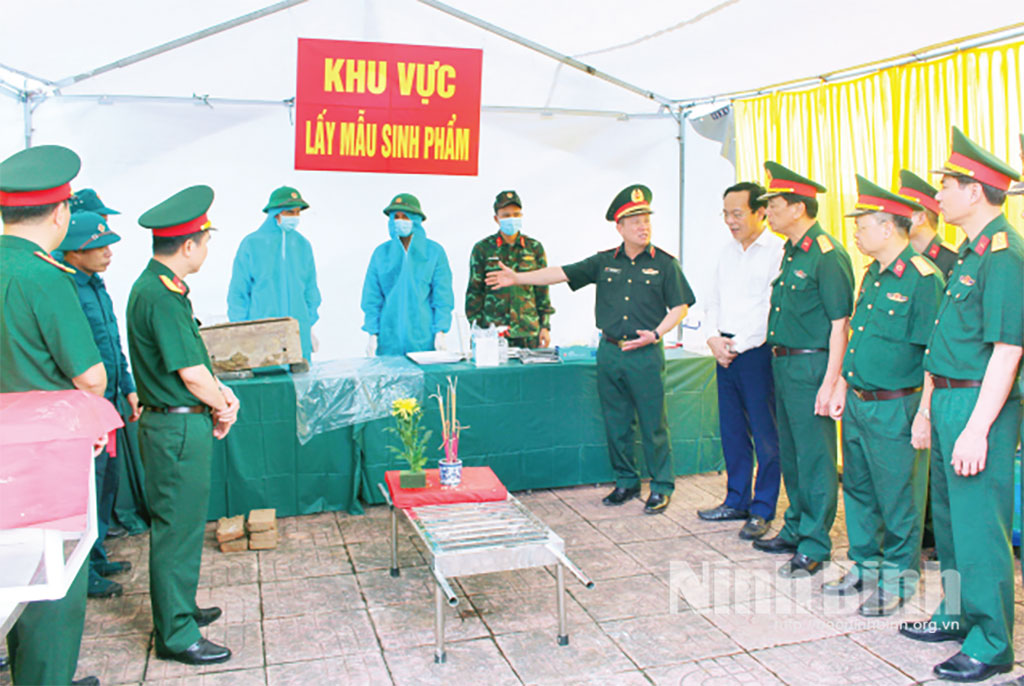
With the determination to reunite fallen heroes with their families and hometowns, the province has mobilised the entire political system to implement a range of coordinated measures, with DNA testing identified as a key solution to identifying previously unidentified remains.
According to the provincial Steering Committee 515, Ninh Binh still has 19,465 martyrs whose remains have yet to be located and recovered, while more than 7,000 graves at 361 cemeteries remain unidentified or lack complete information.
To implement the 500-day campaign to accelerate the search, recovery and identification of martyrs' remains, the committee has adopted a comprehensive action plan, assigning specific responsibilities to relevant agencies and forces.
A major focus of the campaign is the expanded use of DNA analysis, regarded as the most accurate method of identifying martyrs' remains despite its stringent technical requirements.
As of July 14, 2026, the province had exhumed 4,442 of the 7,839 graves containing unidentified remains. Of these, 4,025 bone samples met the standards required for DNA analysis, and 3,959 samples had been transferred to the Military Institute of Forensic Medicine for genetic testing.
At the same time, the provincial Department of Public Security has launched a peak campaign to collect biological samples from martyrs' relatives to build a DNA database for comparison.
To date, authorities have collected 16,329 out of the planned 18,998 reference samples, equivalent to about 86% of the target.
For elderly relatives, those in poor health or unable to travel, mobile teams have visited their homes to collect samples, ensuring no valuable reference data is overlooked.
All bone samples have also been assigned unique identification codes and integrated into the national population identity database, facilitating long-term management, storage and retrieval of information.
Despite the progress, the campaign continues to face significant challenges. Many graves were relocated decades ago, while archival records remain incomplete and inscriptions on gravestones have faded or been lost. Changes in terrain over time have also complicated efforts to verify original burial sites.
In addition, many remains have deteriorated significantly over the decades, reducing DNA quality. In numerous cases, direct relatives of martyrs have either passed away or are of old age, making it more difficult to obtain reference samples for genetic comparison.
To address these challenges, the provincial Steering Committee 515 will continue strengthening public awareness campaigns and collecting information from war veterans, historical witnesses and local residents. It will also work closely with specialised agencies to verify and cross-check available data while ensuring sufficient personnel, equipment and funding for the mission.
According to the committee, every successfully collected DNA sample and every identified grave represents not only a scientific achievement but also renewed hope for families who have waited decades to bring their loved ones home.
The initial outcomes of the 500-day campaign underscore Ninh Binh's commitment to implementing policies for people with meritorious service and honouring fallen soldiers, while helping preserve and promote Vietnam's enduring tradition of "Drinking water, remember the source" to show gratitude to those who sacrificed for the nation./
Tin liên quan

Ninh Binh steps up efforts to protect endangered Delacour’s langur

Ninh Binh steps up sustainable heritage conservation and promotion




Tin cùng chuyên mục


Awards ceremony convened for sixth Party ideology writing contest

Top Vietnamese leader hosts banquet in honour of Swiss President

16th National Assembly commences second session

FAO honours 10 prominent Vietnamese women in agriculture, rural development

Ninh Binh’s delegation attends “Meet Korea 2026” plenary conference