
Ninh Binh works to boost economic development and social security in ethnic minority areas
Investment in infrastructure development and upgrading
Ninh Binh province currently has five communes and wards - Nho Quan, Phu Son, Cuc Phuong, Phu Long and Yen Son - located in ethnic minority and mountainous areas.
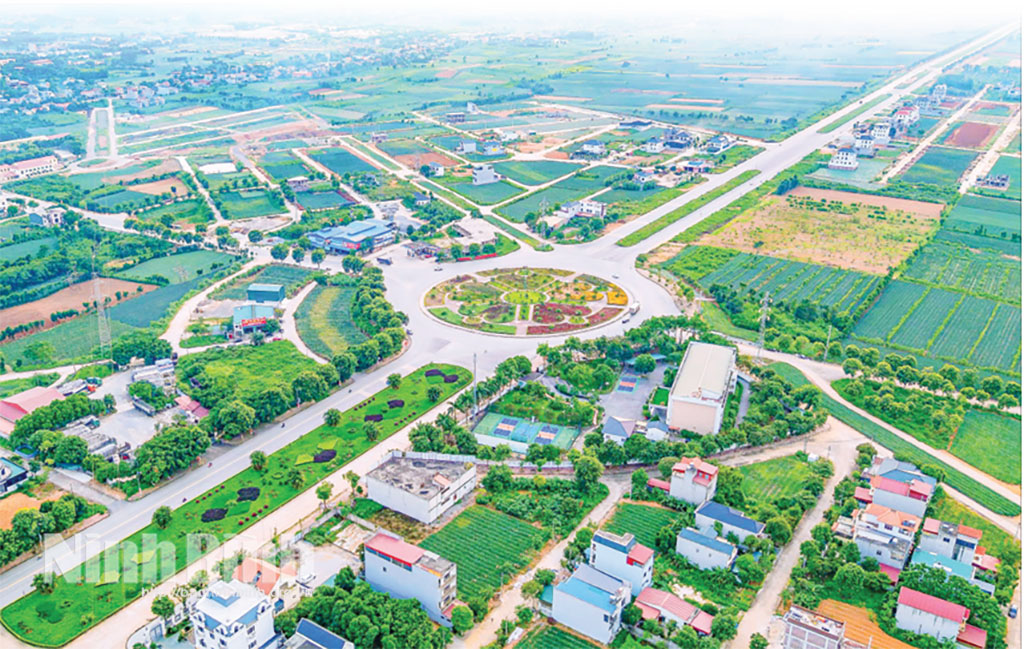
The province has focused resources on developing and upgrading its transport network and public infrastructure. A total of 16,904 road sections, covering 2,138.7 kilometres, have been completed. Meanwhile, a number of key projects have been implemented, including the East-West Road connecting former Nho Quan district with other localities. The project has opened up new development opportunities and created an important driving force for socio-economic growth across the province, particularly in ethnic minority areas.
Alongside transport infrastructure, the province has also invested in building and upgrading irrigation systems, markets, schools, healthcare stations, cultural centres, electricity networks, telecommunications and information and communications infrastructure. These facilities have helped meet local residents' production and daily needs, strengthen national defence and security, and improve their quality of life.
In late October 2026, Dong Tien hamlet in Cuc Phuong commune received a meaningful community facility: a Muong Cultural Centre. The project was launched in April 2026 by Emulation Block No. 2 of the Ministry of National Defence.
After more than five months of construction, the facility has been completed, providing a venue for cultural activities and community gatherings for local ethnic minority residents.
Dinh Cong Vinh, head of Dong Tien hamlet, said that more than 90% of the hamlet's population are Muong people. Residents continue to preserve many distinctive traditional cultural practices, including gong performances, bamboo dancing and traditional love duet singing.
The construction and inauguration of the Muong Cultural Centre are of practical significance, helping preserve and promote the distinctive cultural heritage of the Muong ethnic group while strengthening solidarity within the local community. The centre is also expected to serve as a venue for expanding community-based tourism and attracting more visitors to Cuc Phuong.
Under the National target programme on socio-economic development in ethnic minority and mountainous areas for the 2021-2025 period, Ninh Binh allocated 179.03 billion VND to implement eight component projects.
Of this amount, 7.77 billion VND was earmarked to address shortages of residential land, housing, production land and domestic water; 16.45 billion VND was allocated to support production through the provision of raw materials, seeds, livestock breeds and technical supplies for agriculture, forestry and fisheries, as well as livelihood diversification activities. Another 23.09 billion VND was invested in essential infrastructure, including the construction and upgrading of rural roads, electricity supply facilities serving daily life, production and business activities, and schools and classrooms meeting national standards.
Over the past five years, the programme has supported the construction of eight rural road projects, four school projects, four irrigation facilities, one rural electricity project, one hamlet cultural centre and two healthcare stations in ethnic minority communes.
To date, all communes in the province's ethnic minority and mountainous areas have achieved 100% coverage in several key infrastructure criteria: schools and healthcare stations meeting national standards, access to the national electricity grid, and roads connecting to commune centres.
These achievements have helped improve local residents' material and spiritual well-being, transform rural landscapes, promote socio-economic development and gradually narrow the development gap between ethnic minority and mountainous areas and other parts of the province.
Supporting livelihoods and sustainable poverty reduction
In Phu Long commune, traditional crops such as maize and cassava have increasingly been replaced by higher-value crops and livestock, including custard apples, sticky rice and deer.
Among these, deer farming for velvet antlers has emerged as an effective livelihood model. More than 40 households in the commune are raising over 600 deer in total. Deer antlers are now a popular product among consumers and command relatively high prices, enabling many households to earn between 250 - 300 million VND annually.
The success of these production and livestock models has made an important contribution to improving income-related criteria under the commune's new-style rural development programme.
Phu Long's per capita income currently stands at 75 million VND per year. Its multidimensional poverty rate has fallen to 2.05%, while 96% of households have permanent housing and more than 91% of the workforce is employed.
Dang Xuan Tuan, Chairman of the Phu Long Commune People's Committee, said ethnic minority people account for more than 50% of the commune's population.
Alongside support from central and provincial policies, Phu Long has set a target for the 2025-2030 tenure of fully tapping its potential and advantages to accelerate development. By 2030, the commune aims to meet the advanced new-style rural development standards and become a locality with a well-developed industrial, service and green tourism sector, harmonising economic growth with the preservation of ethnic cultural identity.
The commune is currently focusing on developing specialised production areas for key agricultural products, including pineapples, off-season custard apples and Thuong Sung's Hat Cau sticky rice.
It is also working to establish geographical indications and OCOP (One Commune, One Product) brands for honey, deer velvet antlers and Ky Lao ‘bui’ nuts.
In addition, the locality is stepping up efforts to promote the development of Phu Long Industrial Park, with a view to establishing an integrated industrial, urban and service area. The project is expected to drive significant economic restructuring and ensure rapid and sustainable growth.
For the 2025-2030 period, Phu Long aims to raise annual per capita income to at least 96 million VND, reduce the multidimensional poverty rate to below 1%, and ensure that sustainably well-off and affluent households account for at least 65% of the total.
In implementing Resolution No. 24-NQ/TW dated March 12, 2003, of the 9th Party Central Committee and the Politburo's Conclusion No. 65-KL/TW dated October 30, 2019, on ethnic affairs, Ninh Binh has rolled out a comprehensive range of policies, programmes and projects to promote socio-economic development in ethnic minority and mountainous areas.
The province has focused resources on poverty reduction, production development, income improvement and better living conditions, while promoting education, healthcare and cultural development, ensuring social welfare, strengthening national defence and security, and consolidating grassroots political systems.
Over the past five years, these policies have provided residential land support to 45 households, with total funding of more than 1.6 billion VND; housing assistance to 32 households, worth 4.5 billion VND; and vocational transition support to 52 households, totalling more than 1.1 billion VND. Support has also been provided for value-chain-based production development and the establishment of start-up models.
Social security programmes have also received particular attention across the province.
Since 2019, a total of 786 instances of poor households with members who are people with meritorious services to the revolution have received monthly allowances. Meanwhile, monthly assistance has been provided to 1,008 beneficiaries from ethnic minority areas, including poor and near-poor households.
By the end of 2025, average per capita income in the five communes was estimated at 63 million VND per year, while the poverty rate had fallen to approximately 1.99%.
These results demonstrate the effective implementation and integration of the Party's guidelines, the State's policies and laws, and national target programmes. They have helped mobilise resources for infrastructure development, support production, ensure social security and progressively improve the material and spiritual well-being of ethnic minority communities across the province./.
Tin cùng chuyên mục
Lawmakers scrutinise draft Law on Cultural Industry Development
Top Vietnamese leader holds talks with Japanese PM

National Assembly passes 2027 state budget plan