

Ninh Binh launches IOC, NinhBinh-S app and multimedia learning materials campaign
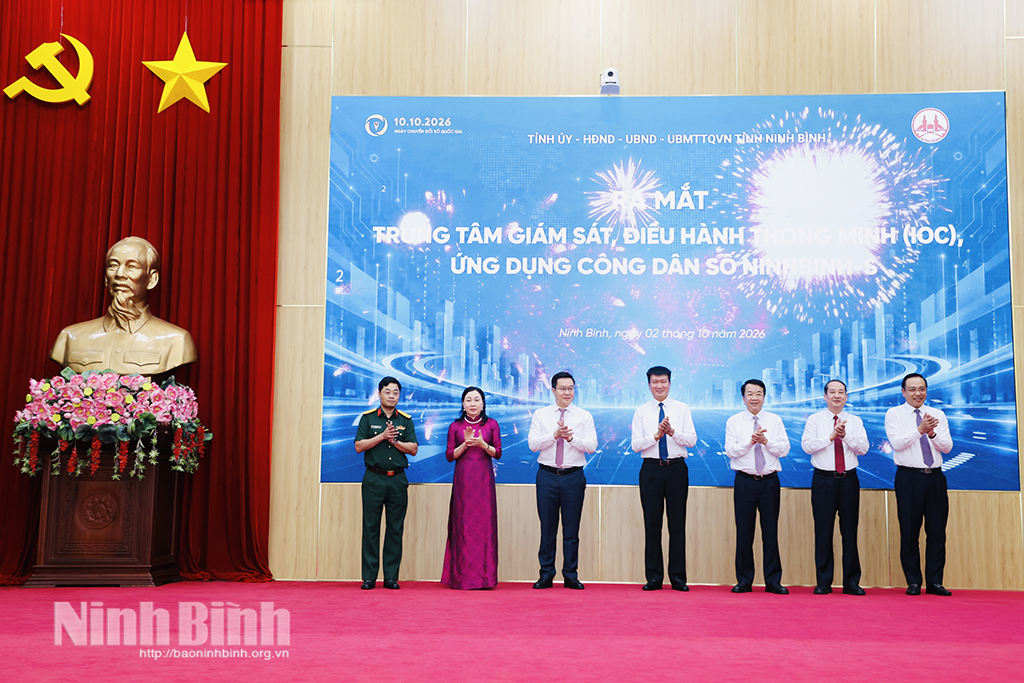
The event was attended by Tran Huy Tuan, Member of the Party Central Committee, Secretary of the Provincial Party Committee and head of the provincial Steering Committee for Science and Technology Development, Innovation and Digital Transformation; Tran Dang Quynh, Alternate Member of the Party Central Committee, Permanent Deputy Secretary of the provincial Party Committee and deputy head of the Steering Committee; Nguyen Thanh Binh, Deputy Secretary of the provincial Party Committee and Chairman of the provincial People’s Committee; Mai Van Tuan, Deputy Secretary of the provincial Party Committee and head of the provincial Delegation of National Assembly Deputies; and Dinh Thi Lua, Deputy Secretary of the provincial Party Committee and President of the provincial Vietnam Fatherland Front Committee.
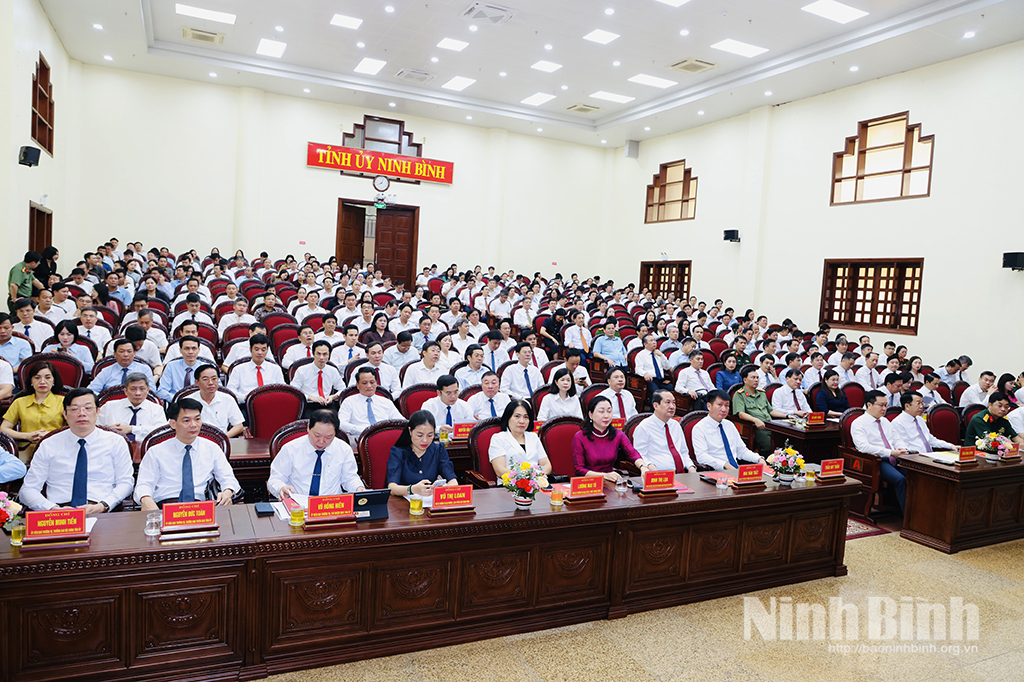
The conference was held both in person and online, with the main venue at the provincial Party Committee headquarters connected to 129 communes and wards across the province.
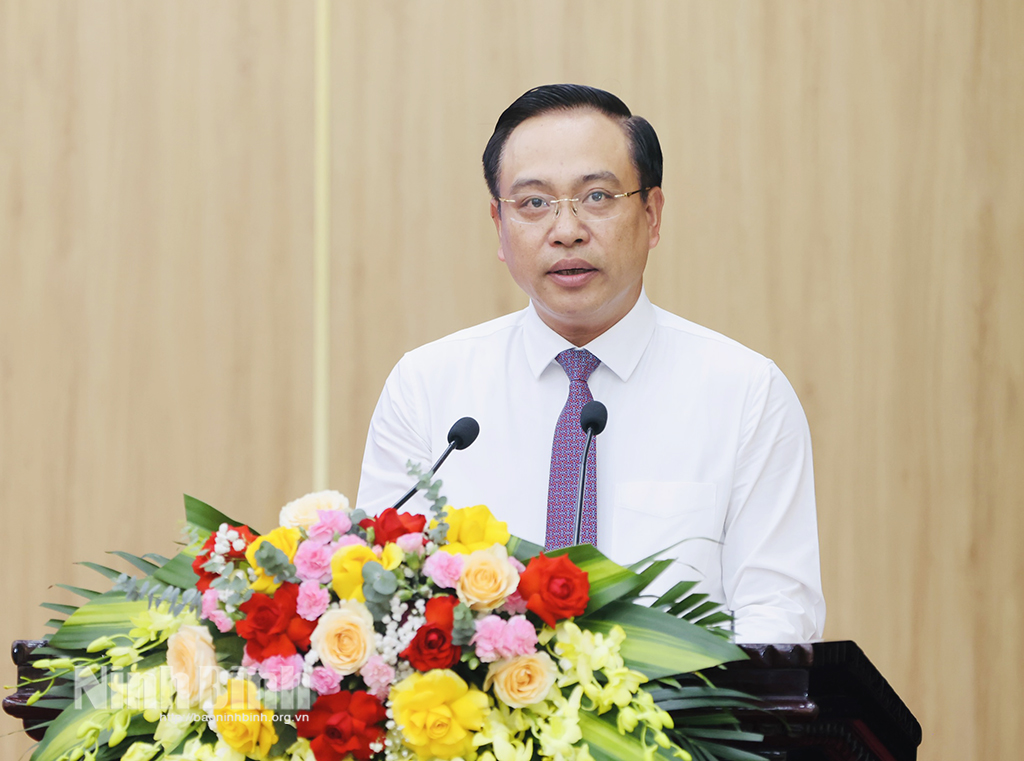
In his opening remarks, Vice Chairman of the Ninh Binh People’s Committee Dang Thanh Son said that, to achieve successful digital transformation, the province would continue to improve mechanisms and policies on information technology application and digital transformation, particularly policies to attract and retain digital transformation personnel.
The province will also focus on effectively implementing Resolution No. 06-NQ/TU, dated January 30, 2026, of the provincial Party Committee on a “breakthrough strategy for developing science and technology, innovation and digital transformation in Ninh Binh through 2030, with a vision to 2045,” as well as the provincial digital transformation scheme for 2026-2030.
Ninh Binh will accelerate the development of digital infrastructure, expand 5G mobile broadband coverage, promote digitalisation across economic sectors, and build and connect data systems for sharing and interoperability. It will also improve the quality of services for residents and businesses, placing them at the centre of the digital transformation process, while strengthening cybersecurity, information security and personal data protection.
At the programme, delegates performed the launching ceremony for the Intelligent Operations Centre and the NinhBinh-S Digital Citizen application.
Affirming that the pilot operation of the IOC and Ninh Binh-S represents a concrete step towards implementing the province’s policy of accelerating digital transformation, Tuan called for the substantive implementation of the “multimedia learning materials package,” with the goal of ensuring that 100% of cadres, civil servants and public employees complete the programme and receive certification before November 30, 2026.
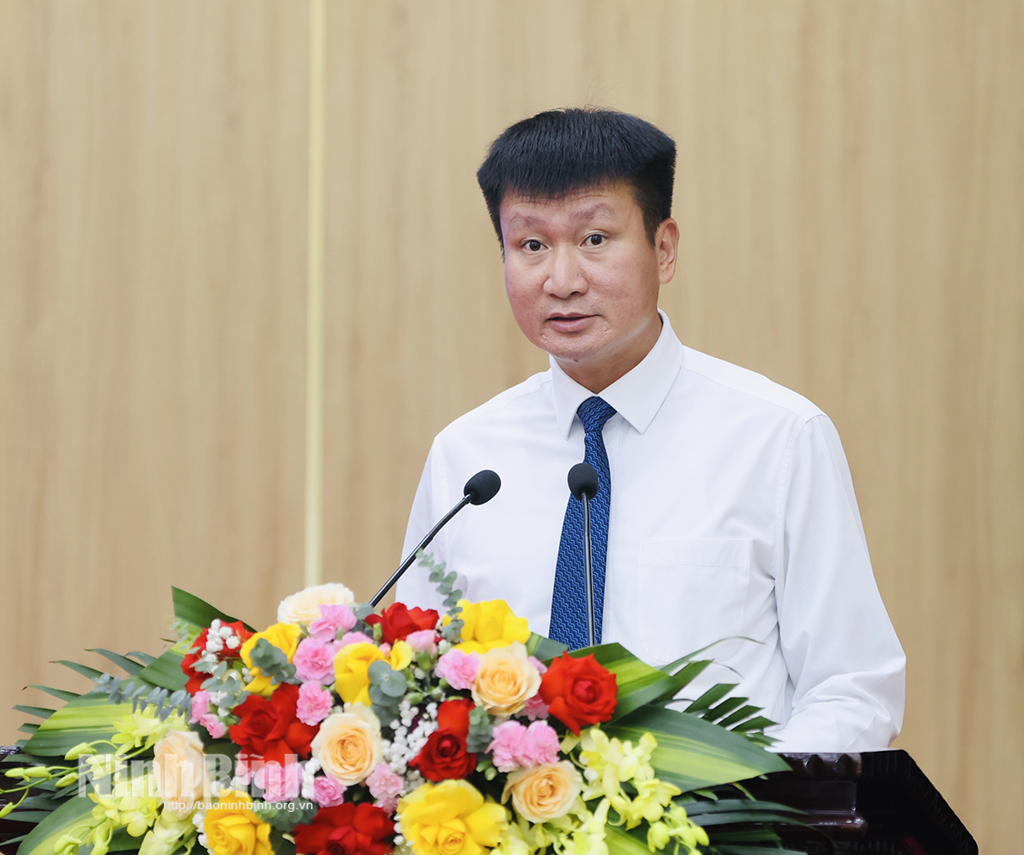
He also called for strengthening community digital technology teams and digital transformation support points; promoting the use of Ninh Binh-S, VNeID, electronic identification and online public services; and providing particular support for elderly and disadvantaged people while preventing online scams.
The province should also conduct practical assessments of the effectiveness of the pilot programme, including the capacity of 13 pilot units to receive and process feedback from residents, he said.
At the same time, Ninh Binh needs to improve data quality, ensuring that data is complete, accurate, timely and consistent, while enhancing connectivity and interoperability. The province should also make effective use of seven operational scenarios incorporating 92 indicators to support leadership, direction and administration.
In recent years, Ninh Binh’s digital transformation has been implemented comprehensively across three pillars: digital government, digital economy and digital society, producing a number of notable results.
Tasks under the Politburo’s Resolution No. 57-NQ/TW on a “breakthrough in the development of science and technology, innovation and national digital transformation” have been carried out on schedule, with all targets for science and technology, innovation and digital transformation meeting or exceeding their plans.
Ninh Binh ranks fourth out of 34 provinces and centrally-run cities in the Public Administration Reform Index (PAR Index), 12th in the Digital Transformation Index (DTI), and 15th in the Provincial Innovation Index.
Administrative reform and the digitalisation of administrative procedures have also made positive progress. All 2,026 eligible administrative procedures are now available online, while the rate of online applications has reached 98%, the rate of on-time processing exceeds 98.5%, and online payments account for 96%.
In terms of digital society development, more than 98% of community digital technology teams have been consolidated, while more than 1,000 digital transformation support points have been approved.
The implementation of the national project on developing population data, electronic identification and authentication applications to support national digital transformation for 2022-2025, with a vision to 2030, has also been accelerated.
Nearly 2 million land parcels have undergone data cleansing, while more than 19,000 DNA samples have been collected. Some 98.2% of citizens aged six and above have been issued identity cards, and 80% of citizens aged six and above have Level-2 electronic identification accounts./.
Tin liên quan

Ninh Binh launches provincial-level Innovation Centre

Ninh Binh launches emulation movement to achieve double-digit growth
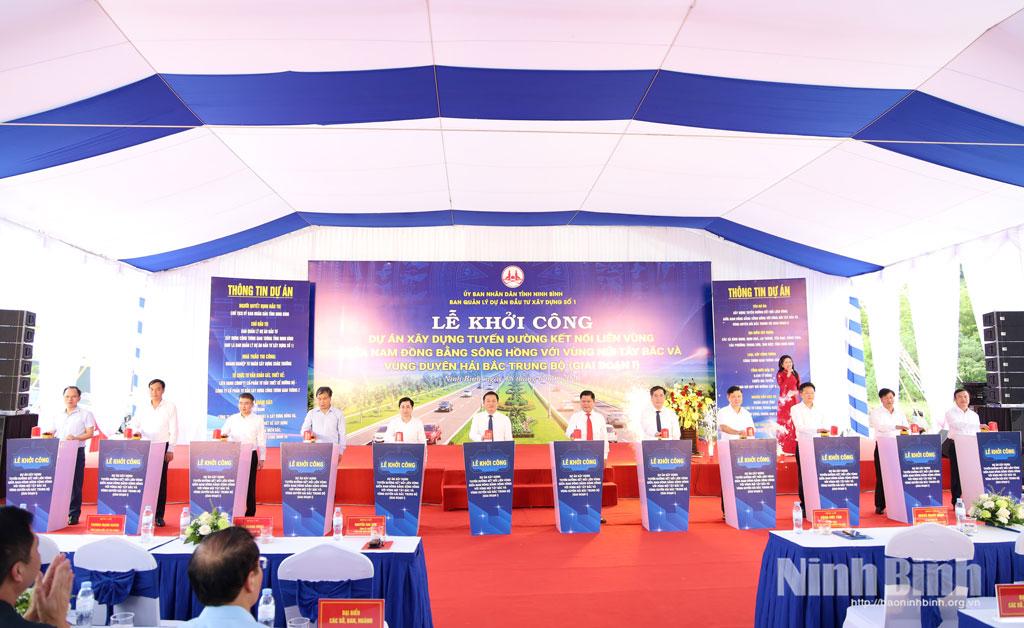

Ninh Binh launches emulation drive to achieve double-digit growth target

Ninh Binh launches Tet tree-planting festival 2026


Tin cùng chuyên mục


Ninh Binh launches provincial-level Innovation Centre

Top leader holds talks with European Council President

Vietnam regards European Union as one of its priority partners: Top leader

Top Vietnamese leader begins official visits to EU, Belgium
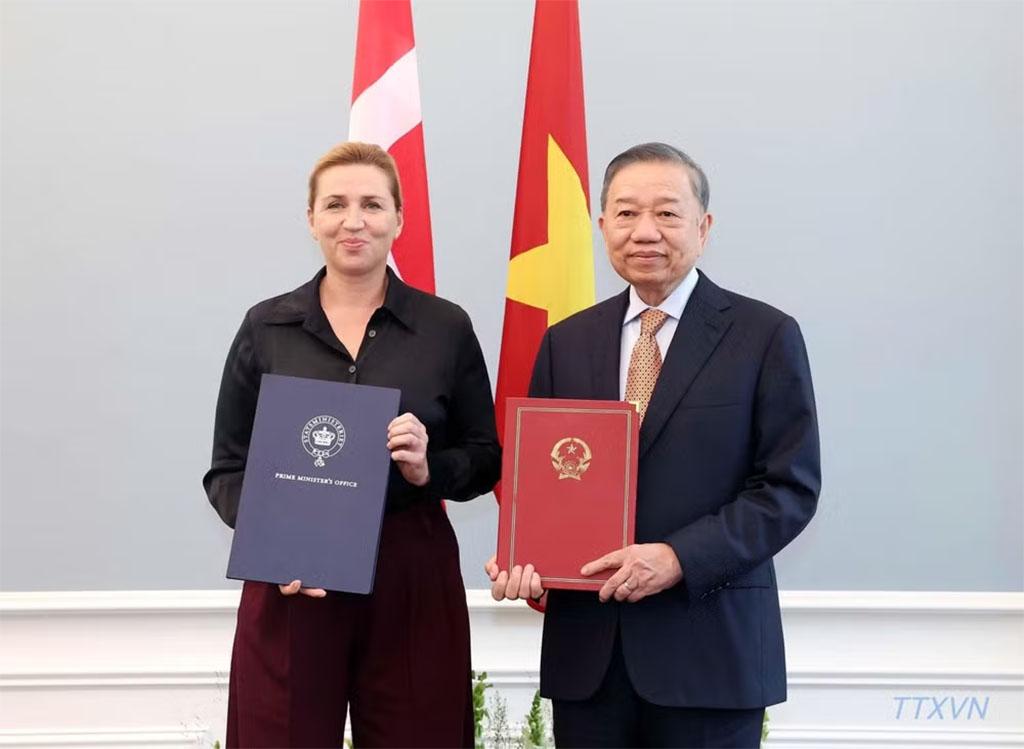
Vietnam, Denmark upgrade ties to Comprehensive Strategic Partnership