
Tien Chua Cave relic site in Ninh Binh preserves legacy of female general Le Chan
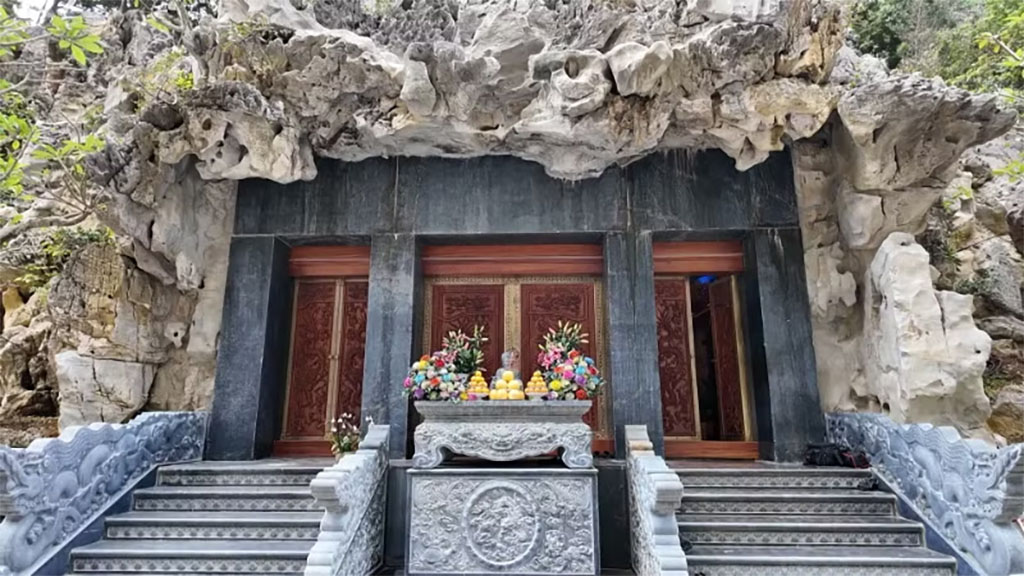
In 2025, the Lat Son scenic and historical relic complex was recognised as a national relic by the Ministry of Culture, Sports and Tourism.
Situated on a mountainside more than 200 metres above sea level, on the border between Ly Thuong Kiet and Chau Son wards in Ninh Binh province, the Tien Chua Cave relic site (formerly in Kien Khe town) has long been associated with the legend of female general Le Chan, one of the most distinguished commanders of the Trung Sisters' uprising against the invading Eastern Han army in the first century.
According to local legend, when the Eastern Han forces launched another invasion after a series of fierce battles, Le Chan retreated from An Bien (now Hai Phong) to Giat Dau mountain. On the 13th day of the 7th lunar month in AD 43, determined to preserve her honour and avoid capture by the enemy, she threw herself from the mountain. Surviving insurgents secretly buried her remains inside the cave. Her sacrifice has since become a symbol of loyalty, resilience and patriotism.
Tran Tu Luc, Chairman of the Vietnam Fatherland Front Committee of Chau Son ward, said that according to local elders, the Princess Cave relic site had long served as a place of spiritual worship. Local residents established an altar to commemorate female general Le Chan and other national contributors. Folk religious rituals continue to be held annually to pay tribute to those who sacrificed for national independence while preserving the locality's traditional cultural identity.
In addition to its picturesque natural landscape featuring a system of limestone caves, Tien Chua Cave has maintained spiritual traditions passed down through generations, contributing to the distinctive cultural identity of the Lat Son area. Beyond its historical legends, the site is also regarded as one of Vietnam's important archaeological locations.
Following Decision No. 134/QD-UBND issued on January 18, 2023 by the People's Committee of former Ha Nam province on an emergency archaeological excavation at the site, the Institute of Archaeology under the Vietnam Academy of Social Sciences, in coordination with the provincial museum, carried out field excavations to study and preserve the remaining archaeological evidence.
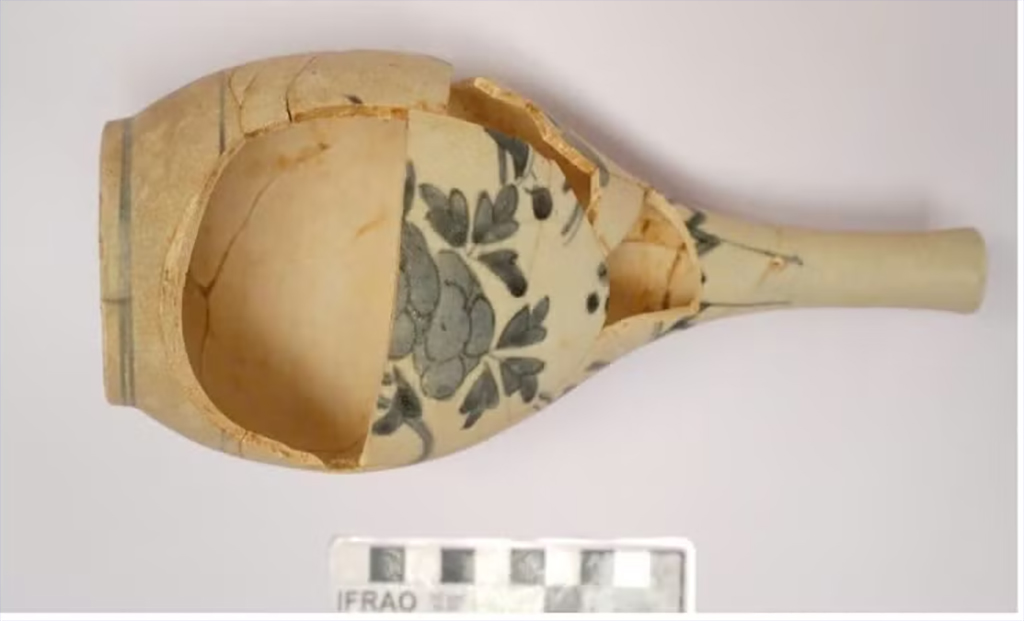
The excavation uncovered more than 50 valuable artefacts, including a ceramic pattern stamp dating back approximately 4,000 years, stone tools, Dong Son culture stone earrings more than 2,000 years old, as well as ceramic fragments, roof tiles and iron nails reflecting the cave's continuous use across different historical periods.
Researchers also found that the cave's sediment layer ranges from approximately five to eight metres thick, depending on location.
Charcoal samples analysed during the excavation indicated that the sediment dates back around 20,000 years. The cultural layer also yielded numerous animal bones and teeth from the Late Pleistocene, fragments of freshwater mollusc shells, pebbles and traces of prehistoric human activity.
According to the archaeological team, palaeontological sites remain extremely rare in Vietnam. At the time of the 2023 excavation, only slightly more than 10 such sites had been identified and studied nationwide.
The discovery of a cave with such a thick and well-preserved sedimentary sequence at Tien Chua Cave is considered particularly significant for research into Vietnam's natural history and the emergence of prehistoric human settlement.
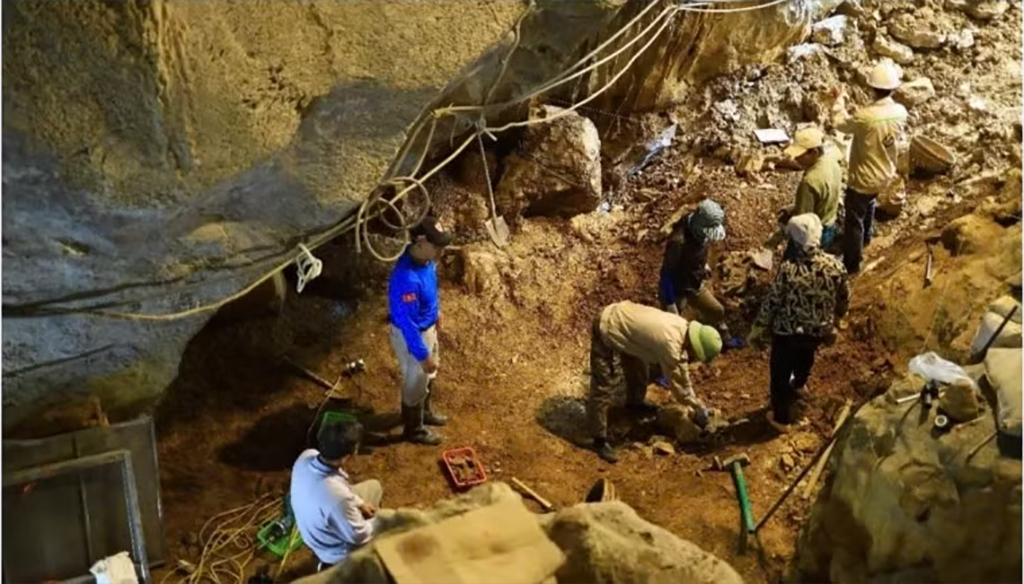
Archaeologists also identified numerous architectural remains beneath the cave floor, including roof tiles, bricks, iron nails, glazed ceramic bowls and stoneware dating from the 17th and 18th centuries. Several brown-glazed ceramic pedestal fragments from the late 14th century, during the Tran Dynasty, indicate that the cave had served as a place of worship for centuries.
Field surveys further revealed that the area stretching from Tien Chua Cave through Thung Bau and Giat Dau to Kim Bang, Tam Chuc and neighbouring localities preserves numerous Dong Son cultural relics, including boat burials, bronze drums and bronze jars.
These findings provide additional scientific evidence supporting the historical significance of the wider Lat Son region.
Besides its archaeological value, Tien Chua Cave is also associated with relics linked to the Tran Dynasty. According to historical records and local folklore, in 1373, amid the war against Champa, King Tran Nghe Tong ordered valuable royal treasures to be hidden in the Kien Khe mountain range to ensure their safety. The story has been passed down through generations and remains an important part of the area's historical memory.
Vu Thi Nga, a resident of Chau Son ward, said that in the past there had been no statue of general Le Chan inside the cave. Local people had nevertheless continued to visit the site to burn incense in remembrance of her contributions. Following the archaeological research, local authorities restored her tomb, established an altar and erected a statue in her honour.
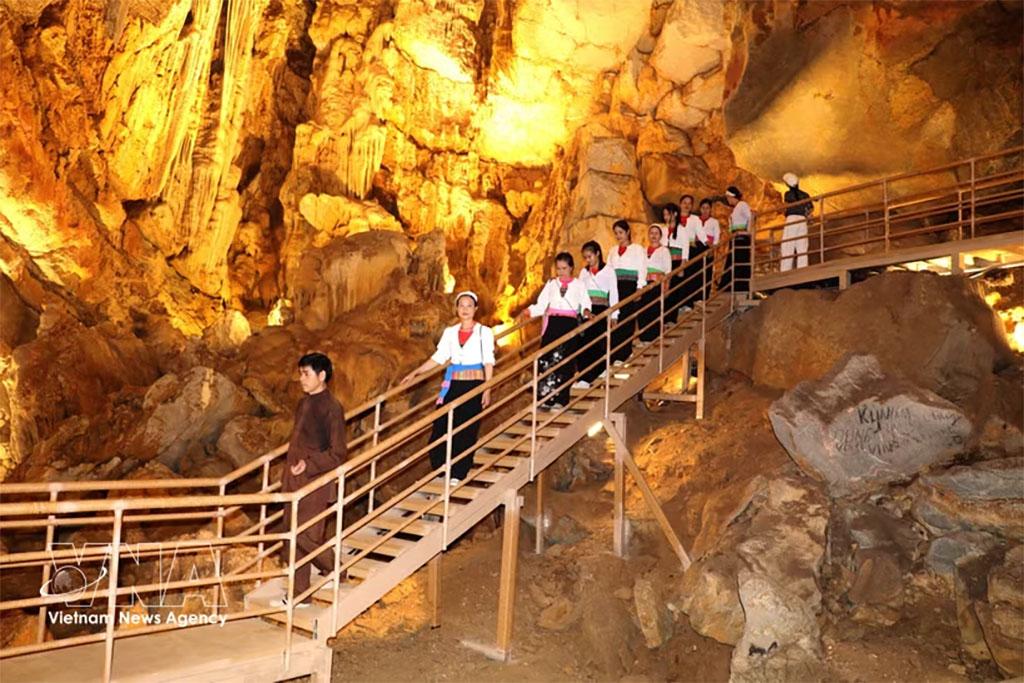
Alongside its rich historical significance, Tien Chua Cave also features striking natural scenery. Its limestone formations and uniquely shaped stalactites, together with the surrounding karst mountains, create a landscape that is both majestic and tranquil.
Today, Tien Chua Cave has become one of Ninh Binh province's typical cultural and spiritual destinations. The site preserves sedimentary layers dating back tens of thousands of years as well as historical stories associated with female general Le Chan and generations of inhabitants in the Lat Son region.
Its historical, archaeological, landscape and spiritual values are being preserved and promoted, contributing to fostering patriotism, strengthening national pride and raising public awareness of cultural heritage conservation among present and future generations./.
Tin cùng chuyên mục

Muong Lo Festival 2026 opens with grand Xoe dance performance
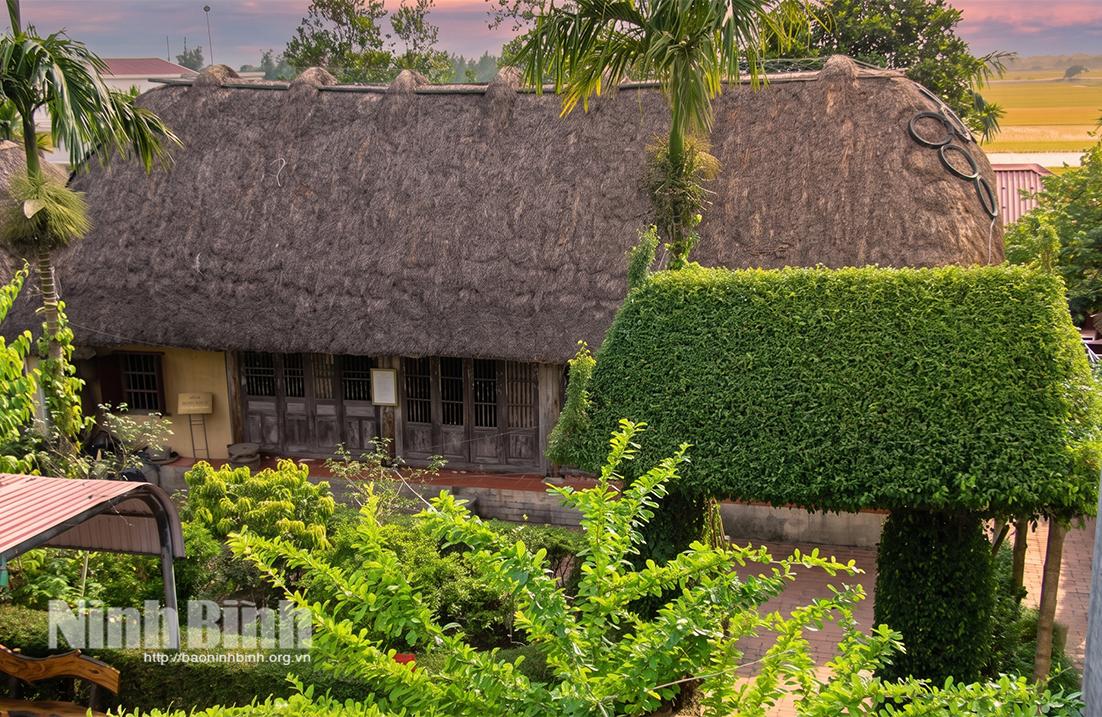
Preserving traditional sedge-thatch houses in Ninh Binh