
Ninh Binh province expands sustainable clam farming
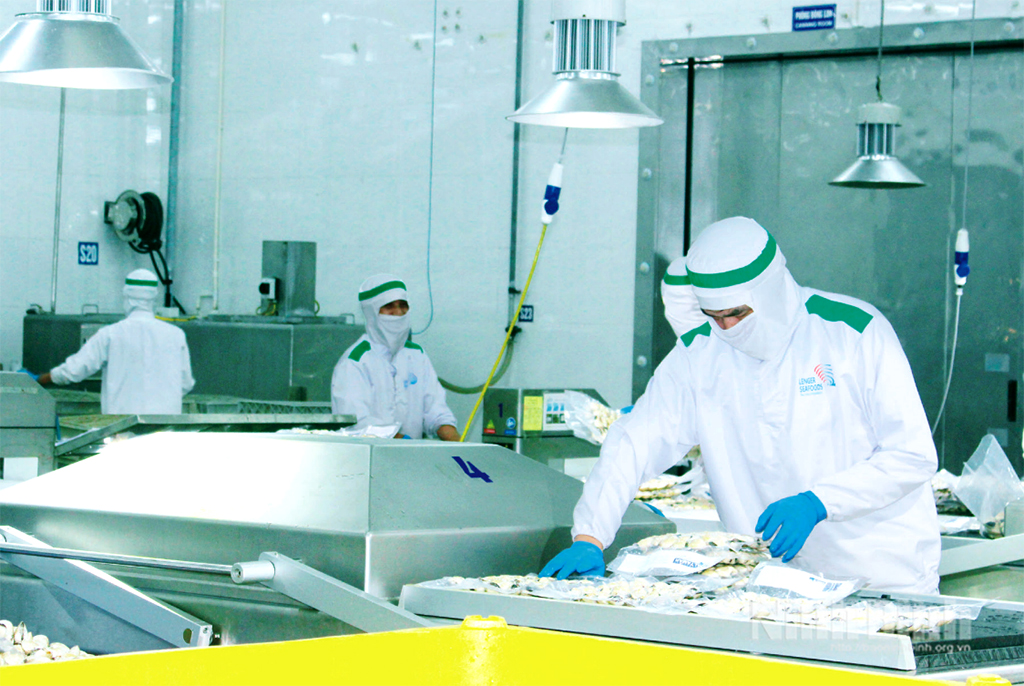
Along the coastal mudflats, local farmers are gradually shifting from fragmented small-scale production to value-chain linkages, opening new prospects for increasing product value and building a strong brand for Ninh Binh clams in both domestic and international markets.
Kim Son coastal area has long benefited from favourable natural conditions, including more than 18.5 kilometres of coastline and the estuaries of the Day and Can rivers. Each year, sediment deposits extend tidal flats by an estimated 80 - 100 metres, creating vast areas suitable for aquaculture development. Against this backdrop, clam farming has become a primary source of income for many local households.
Nguyen Van Quang, a clam farmer in Kim Dong commune, said ASC-certified clams are harvested under strict schedules to ensure commercial size standards while minimising environmental impact. After harvesting, the clams are cleaned using treated seawater, impurities are removed, and the products are centrally graded before packaging.
According to Pham Huy Trung, Head of the Economic Division of Kim Dong commune, the commune currently has 226 households engaged in clam farming. Commercial clam farming covers around 1,200 hectares, generating nearly 28,000 tonnes annually. The industry has become a stable source of employment and income for local residents.
Data from the provincial Fisheries and Fisheries Surveillance Sub-Department under the Department of Agriculture and Environment show that Ninh Binh now has approximately 3,600 hectares of clam farming areas, producing around 72,000 tonnes each year. Most farming activities are concentrated in tidal flats outside sea dikes in communes such as Rang Dong, Giao Ninh, Giao Minh, Kim Dong and Binh Minh.
Beyond generating stable incomes, clam farming plays an increasingly important role in the province’s fishery economy. One of the most notable developments has been the growing focus among local authorities, businesses and farmers on reorganising production through linked value chains.
In recent years, the Department of Agriculture and Environment has coordinated with organisations and enterprises to implement production linkage projects based on international standards.
Trung noted that applying ASC international standards helps monitor water quality, control disease outbreaks, reduce waste and protect tidal-flat ecosystems, while also proving the traceability, quality and sustainability of the products.
Large-scale linked farming zones have been established where households follow standardised procedures from seed selection and farming practices to harvesting. Products are strictly monitored to meet demanding market requirements. In practice, ASC-certified clams command prices 2 -3 times higher than conventional commercial clams, creating strong incentives for farmers to move away from spontaneous production toward cooperative and linked models.
Alongside commercial farming, the province has also prioritised the development of mollusk seed production. Ninh Binh currently has 365 hatcheries producing clam and oyster seeds across nearly 400 hectares. In 2025, clam seed output reached approximately 85.5 billion juveniles, supplying local demand and many other provinces nationwide.
Despite these achievements, the clam farming industry has continued to face numerous challenges, including climate change, environmental pollution and increasingly complex disease outbreaks. In addition, sediment accumulation at river mouths has caused some farming areas to rise above suitable levels for clam cultivation.
In response, the agriculture and environment sector has strengthened management and monitoring efforts. Each year, specialised agencies conduct between 15 - 18 environmental monitoring campaigns, collecting samples to analyse hydrological, chemical, microbiological and heavy metal indicators in order to provide timely warnings to farmers. As a result, disease outbreaks have largely been kept under control in recent years, helping reduce losses in farming areas.
Food safety management has also been tightened. Harvesting, processing and preliminary treatment of clams are closely supervised to ensure compliance with European market standards. This is considered a key requirement for Ninh Binh’s clam products to integrate more deeply into global supply chains.
At the same time, the province is calling for greater business investment in deep processing and product diversification to increase added value. Developing closed value chains from seed production to consumption is expected to improve economic efficiency and stabilise market outlets for local farmers.
According to industry assessments, Ninh Binh still has more than 2,000 hectares of potential area suitable for clam farming expansion. This provides significant room for developing raw material zones to support processing and exports. However, authorities stress that expansion must go hand in hand with proper planning and strict environmental and technical standards.
Looking ahead, the Department of Agriculture and Environment will continue encouraging localities, enterprises and farmers to apply science and technology in production, improve farming processes and enhance product quality. Training programmes and technical support will also be expanded to help farmers adopt more modern production methods.
With synchronized solutions being implemented and strong natural advantages already in place, Ninh Binh’s clam industry is expected to strengthen its position in international markets while contributing to local socio-economic development./.
Tin liên quan


Preserving traditional sedge-thatch houses in Ninh Binh




Ninh Binh strengthen friendly cooperation with Oudomxay
Ninh Binh mobilises resources to support disadvantaged students

Tin cùng chuyên mục