
Resolution 79 on state economic sector shifts mindset from “defensive” to “offensive” approach
Issued at a time when Vietnam is entering the new era of national rise, the Politburo’s Resolution No. 79-NQ/TW on the development of the state economic sector sends a strong political and economic message by repositioning the role of the sector with renewed determination and ambition.
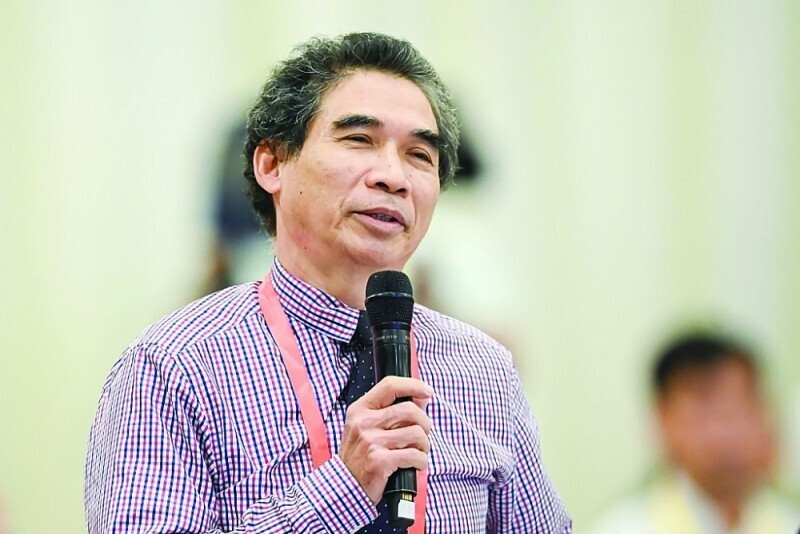
Rather than maintaining a rigid administrative mindset, Resolution No. 79 opens up a new development-oriented approach, granting leading state-owned enterprises (SOEs) greater autonomy to spearhead growth, while subjecting them to the most stringent international governance standards, according to Associate Professor, Doctor Nguyen Thuong Lang, an economist and a senior lecturer at the School of Trade and International Economics under the National Economics University.
According to Lang, the leading role of the state-owned economy has long been a constitutional principle and a consistent pillar throughout Vietnam’s development history, from the centrally planned, subsidy period to the present-day system of state economic groups. The state sector has remained the backbone for fulfilling political tasks, ensuring national defence and security, and safeguarding employment and social welfare.
What distinguishes Resolution No. 79, he noted, is its clear redefinition of the mission of the state economic sector under new conditions. Beyond reaffirming their leading role, the resolution assigns SOEs a pioneering and path-clearing function, requiring them to drive innovation, lead market development and serve as benchmarks for other economic sectors. SOEs are no longer expected merely to preserve capital or operate in low-risk areas, but to represent the credibility and competitiveness of Vietnam’s national economy on the international stage. This shift demands the integration of advanced technology, modern governance and corporate culture, as well as the formation of a contigent of capable, ethical and dedicated entrepreneurs.
Addressing the long-standing debate over balancing political tasks and profitablity, the economist acknowledged that complete alignment cannot be achieved overnight. However, Resolution No. 79 significantly narrows this gap by clarifying ownership principles and operational responsibilities. As SOEs manage assets owned by the entire population, they bear an inherent obligation to serve public and political objectives, particularly in emergencies, natural disasters or national security situations. At the same time, the resolution encourages SOEs to operate largely under market principles, allowing them to compete fairly and improve efficiency while fulfilling their public duties.
While it still takes time for the economy to develop to a higher level so that both political tasks and profitablity could be aligned, the direction identified by the resolution is completely right, he opined.
Regarding the ambitious targets set for 2030, including the formation of 50 SOEs among the top 500 in Southeast Asia, one to three among the global top 500, and three state-owned commercial banks in Asia’s top 100, Lang assessed these goals as challenging but achievable.
He cited the extensive restructuring process that has streamlined the number of SOEs, from about 12,000 to over 860 with state capital at present (including some 500 completely owned by the State), while significantly improving their quality, resilience and competitiveness. SOEs contribute about 12.5% of GDP and 27 30% of total budget revenue (excluding crude oil), and uphold their leading role in strategic sectors such as energy, infrastructure, telecommunications, logistics, and defence security.
Resolution No. 79 also mandates that all SOEs adopt digital governance, with major groups meeting OECD standards. While recognising challenges related to transparency and differences in ownership models, he emphasised that flexible and adaptive implementation could enable Vietnam to achieve a high degree of compatibility with international norms.
From a broader economic perspective, he stressed that the resolution promotes synergy rather than competition between the state and private sectors. By shifting from a “capital-preserving” mindset to a “path-clearing” role, leading SOEs are expected to develop large-scale infrastructure, energy and technology projects, creating expansive ecosystems in which private enterprises can integrate into value chains. This complementary model, he concluded, offers a foundation for shared growth and the realisation of Vietnam’s aspiration for a prosperous and resilient economy./.

Tin cùng chuyên mục