
PM urges stronger coordination in cybersecurity response

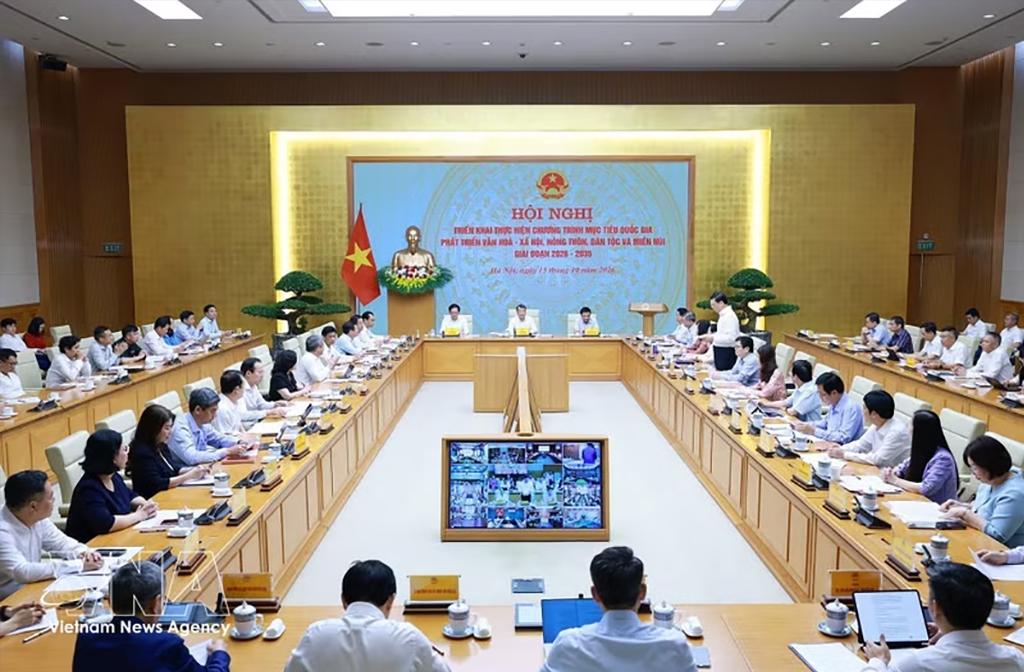
PM Hung, who heads the committee, chaired its second meeting in Ha Noi on August 6, which virtually linked with cybersecurity subcommittees in all 34 provinces and cities.
He lauded ministries, agencies, localities, specialised cybersecurity teams, businesses, industry associations, and experts for their efforts in safeguarding cybersecurity during the first half, saying that they played a big role in maintaining political stability, social safety and order, advancing digital transformation, and fostering public trust in the country's digital space.
Competition among countries in cyberspace will keep expanding well beyond technology into control over data, digital platforms, standards, supply chains, computing capacity, artificial intelligence (AI), and cryptography, he said, adding that cyberattacks, cyber espionage, information warfare, cognitive manipulation, and hi-tech crime will only converge further, threatening not just cybersecurity but socio-economic progress and national security.
The PM told members of the steering committee, ministries, agencies and local authorities to review and nail down operating rules, reporting requirements, and command-and-coordination procedures between the national committee and the subcommittees at the ministry and local level by the end of August.
He also directed the committee’s office to deliver quarterly progress reports on how ministries, agencies and localities are handling their assigned tasks.
On the legal and policy side, the Ministry of Public Security was assigned to fast-track a draft Law on Data Security and submit it to the National Assembly for approval during the parliament's October session. It was also told to develop a national AI security framework and build specialised AI security capabilities in 2027. In the meantime, it must issue guidelines on the safe use of AI within state agencies by late 2026.
The Ministry of Science and Technology was required to swiftly submit special mechanisms and policies to support domestic cybersecurity technology firms and startups, with completion targeted in the third quarter.
He also pushed for the Regional Counter Cybercrime Hub for Asia-Pacific to be put into operation in 2027, a “Cybersecurity Economy” initiative to be prepped for APEC 2027, stronger specialised cybersecurity agencies, and an expansion of the national cybersecurity operations centre by the second quarter of 2028.
Ministries, agencies and localities must update their action plans for the rest of 2026 based on clear roles, tasks, timelines, accountability, outcomes and authority. He stressed that agency heads must assume direct responsibility rather than offloading cybersecurity entirely onto technology units, with the plans to be finalised by end-August.
Other specific tasks were also handed to relevant ministries.

Tin cùng chuyên mục

Awards ceremony convened for sixth Party ideology writing contest

Top Vietnamese leader hosts banquet in honour of Swiss President

16th National Assembly commences second session

FAO honours 10 prominent Vietnamese women in agriculture, rural development

Ninh Binh’s delegation attends “Meet Korea 2026” plenary conference