
Digital transformation becomes new momentum for Ninh Binh’s OCOP products
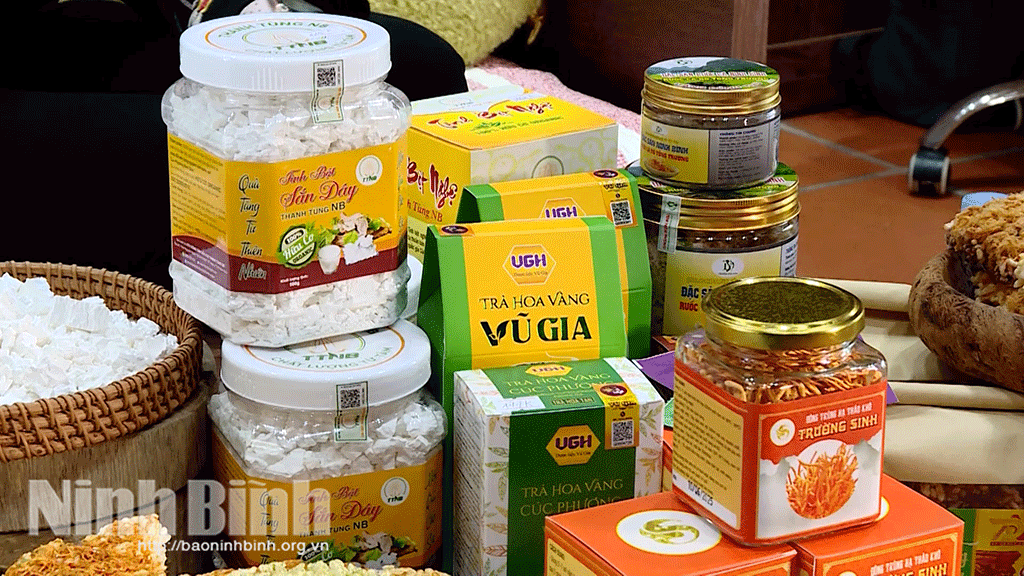
Through digital transformation, value chain development and brand building, the province aims to enhance the competitiveness of OCOP products, expand consumer markets and create a sustainable driver for rural economic growth.
Focusing on quality improvement and higher value for OCOP products
After years of implementing the OCOP programme, Ninh Binh has developed a wide range of products featuring distinctive local characteristics. The programme has contributed to improving incomes for rural people, promoting economic restructuring and unlocking the potential of rural areas.
However, amid increasingly demanding market requirements, the province has identified that OCOP development must move beyond simply increasing the number of certified products. The new focus is on enhancing quality, increasing product value and building stronger brands.
Under the provincial plan for the 2026-2030 period, Ninh Binh aims to develop around 200additional OCOP products rated three stars or higher, including at least four products achieving the national five-star OCOP standard.
At the same time, at least half of existing certified OCOP products are expected to undergo upgrades in quality, packaging, design and market accessibility, with the goal of creating brands that deliver higher economic value.
The province is also encouraging greater participation from cooperatives and enterprises in the OCOP programme. Cooperatives are expected to account for 10-20% of OCOP entities, while small and medium-sized enterprises are projected to represent 5-10%.
Increasing the involvement of these key stakeholders is expected to strengthen linkages between production, processing and distribution, helping establish sustainable value chains while improving production efficiency and product competitiveness.
Accelerating digital transformation and expanding market access
As part of its new development strategy, digital transformation has been identified as a key solution to improve programme management, enhance transparency and expand market opportunities for OCOP products.
Accordingly, all OCOP products in the province, excluding tourism service products, will be integrated with QR codes or electronic traceability labels. The digitalisation of product information will allow consumers to easily access details about origins, production processes and quality standards, while helping build greater confidence in locally made goods.
In parallel, Ninh Binh aims for at least 70% of OCOP producers to participate in e-commerce platforms and online sale channels, enabling them to reach customers nationwide.
To support this transition, the province plans to provide training for 100% of programme managers and OCOP producers in production management, brand development, digital marketing and online business skills.
Alongside digital transformation, Ninh Binh will continue to focus on developing stable raw material areas, strengthening connections between production, processing and consumption, and encouraging the adoption of circular economy models to improve product quality and added value.
Investment in preservation technologies and deep processing is also considered a key measure to help the province’s distinctive agricultural products expand into broader markets and gradually move towards export opportunities.
In addition, trade promotion activities will be implemented through fairs, supply-demand connection events and product promotion programmes. The province will also accelerate the development of brand identity systems, geographical indications and collective trademarks to enhance the value of local specialties.
Linking OCOP development with rural tourism and cultural preservation
Notably, the new phase of the OCOP programme is designed to closely integrate with rural tourism development and the preservation of local cultural identity. Combining OCOP products with tourism experiences is expected to create additional employment opportunities, diversify livelihoods for local residents and make better use of existing regional advantages.
With a strategic transition from quantity-driven expansion to quality enhancement, value creation and technology application, Ninh Binh expects the OCOP programme to continue serving as an important catalyst for modern, sustainable rural economic development while strengthening the competitiveness of local products in the years ahead./.

Tin cùng chuyên mục

Awards ceremony convened for sixth Party ideology writing contest

Top Vietnamese leader hosts banquet in honour of Swiss President

16th National Assembly commences second session
FAO honours 10 prominent Vietnamese women in agriculture, rural development
Ninh Binh’s delegation attends “Meet Korea 2026” plenary conference