
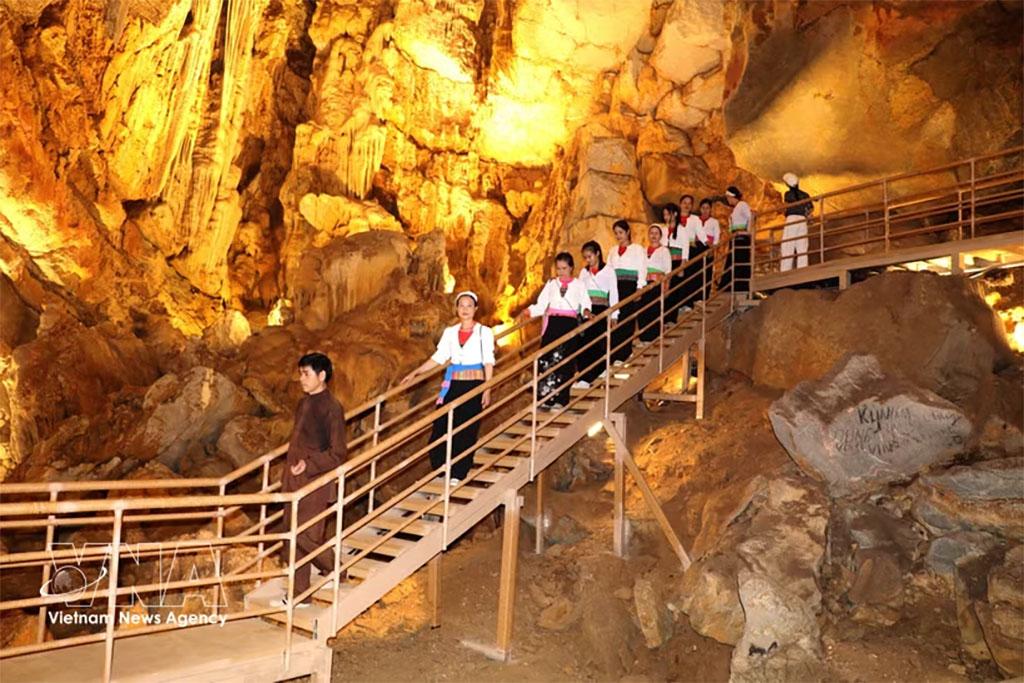
Traditional wedding of Muong people in Ninh Binh added to List of National Intangible Cultural Heritage
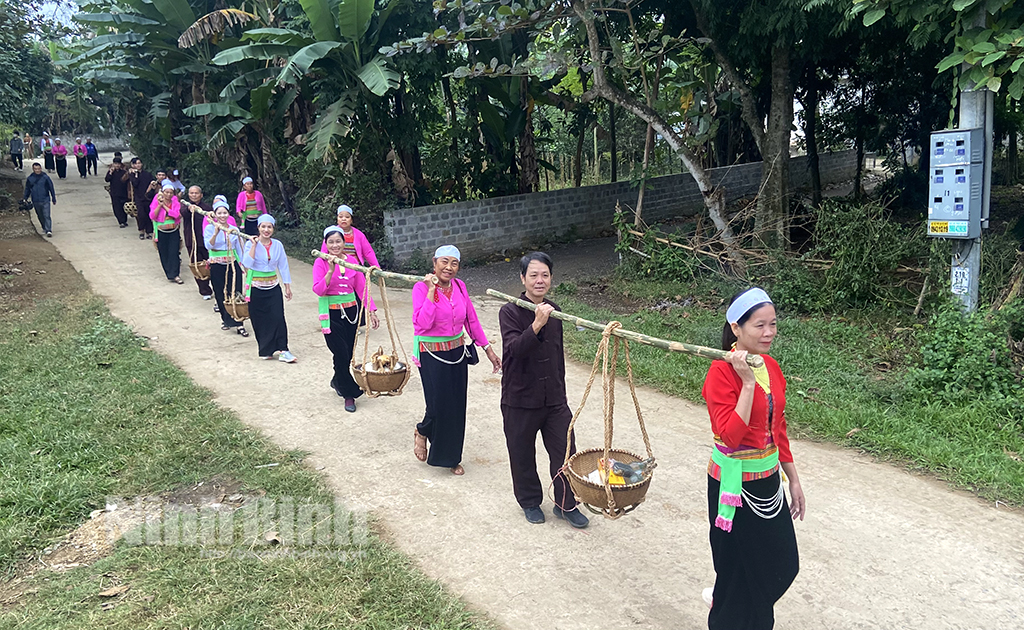
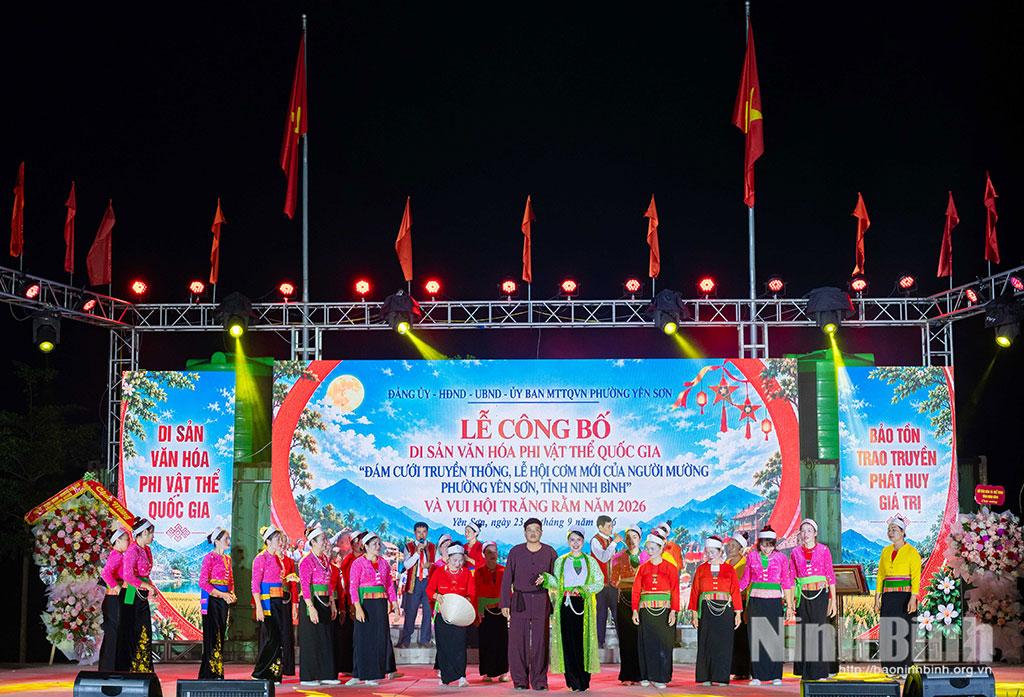
The newly added heritages include folk knowledge and traditional crafts "Knowledge of growing and processing longan in Hung Yen" in Hong Chau ward, Son Nam ward, Tan Hung commune, Khoai Chau commune, Trieu Viet Vuong commune, Tien Lu commune, Hung Yen province; New rice festival and traditional wedding of the Muong ethnic group in Ninh Binh; Folk knowledge "Knowledge of processing eel dishes in Nghe An", Nghe An province; Traditional festival "Mai Bang Temple Festival", Cua Lo ward, Nghe An province.
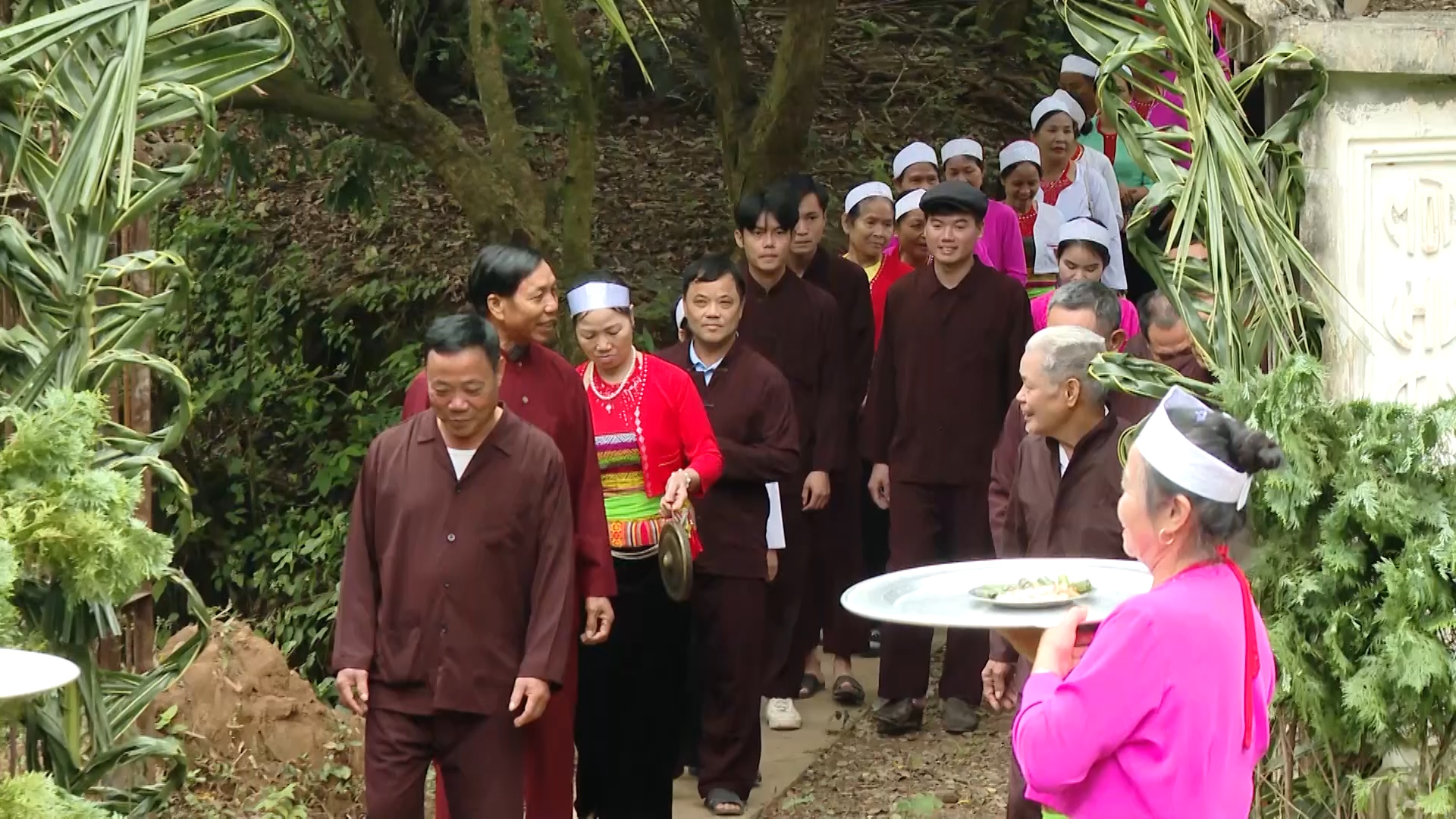
A traditional Muong wedding consists of six sequential steps: the initial meeting, the formal proposal, the engagement ceremony, the dowry presentation, the wedding ceremony, and the post-wedding visit. The role of the "matchmaker" - a companion accompanying both families from the initial preparations - is indispensable.
When the bride arrives, the gong player leads the way, singing love songs that resonate through the mountains and forests. The bride must tuck a deer antler knife into her skirt. Upon arrival, a flower mat is laid out. When the wedding procession arrives at the house, the mother-in-law runs to the centre of the house, circles around a pillar three times, then goes into a room or hides from her daughter-in-law. The bride and her entourage wash their feet with water before going up to the stilt house. The bride and groom perform a ceremony to worship their ancestors. Finally, the ceremony of acknowledging the bride's relatives is held.
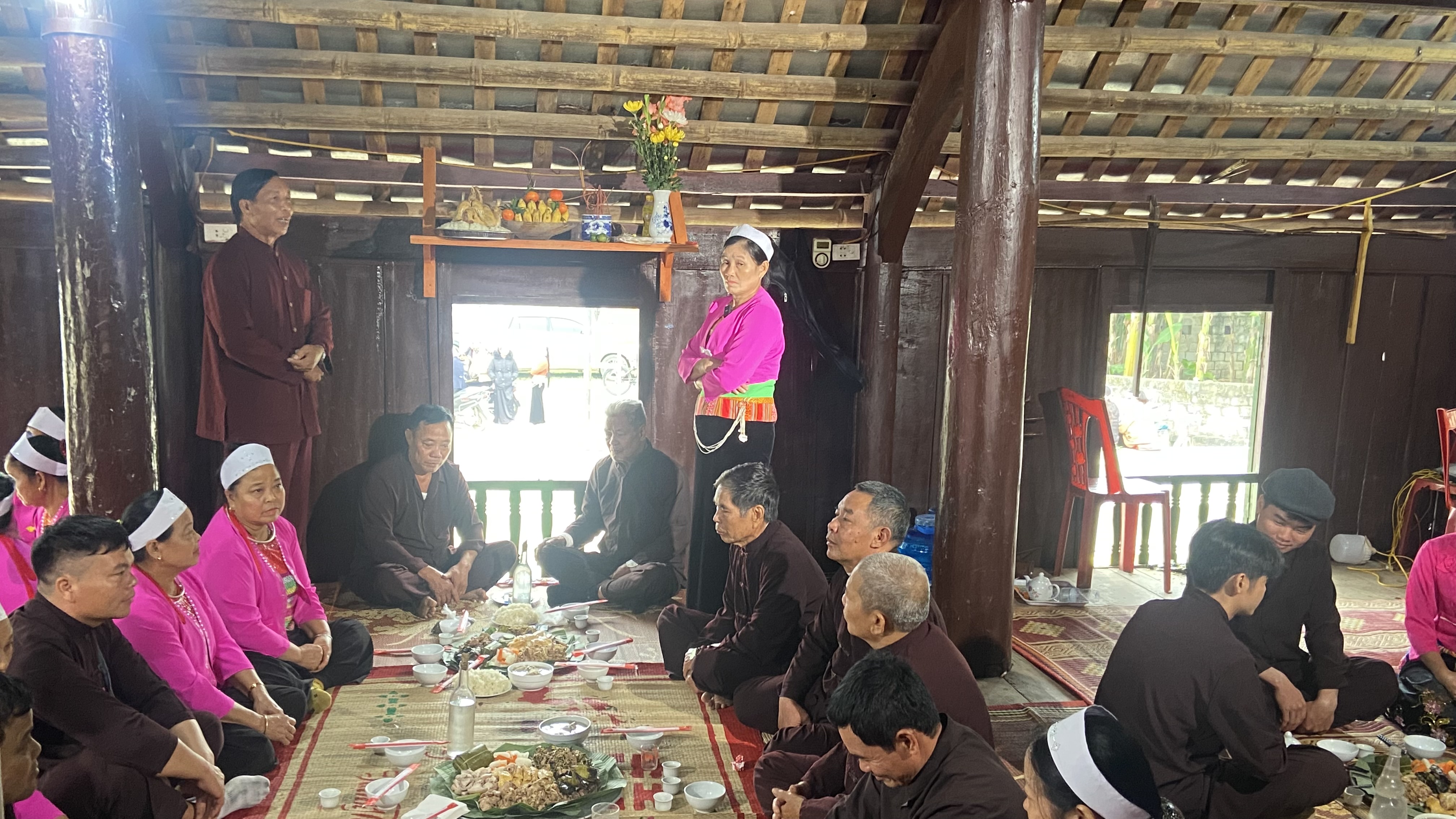
The traditional Muong wedding is a series of rituals deeply rooted in cultural identity, reflecting profound beliefs about marriage, family, community, and the relationship between people and their ancestors and lineage.
From the engagement ceremony and betrothal to the official wedding ceremony, each ritual embodies humanistic values such as mutual respect, filial piety towards parents, and the strong bond between the two families and the community.
The inclusion of the traditional Muong wedding in the List of National Intangible Cultural Heritage means that administrations at all levels and the community where the heritage is located have a shared responsibility to protect, preserve, and promote its value in accordance with the law on cultural heritage./.
Tin cùng chuyên mục
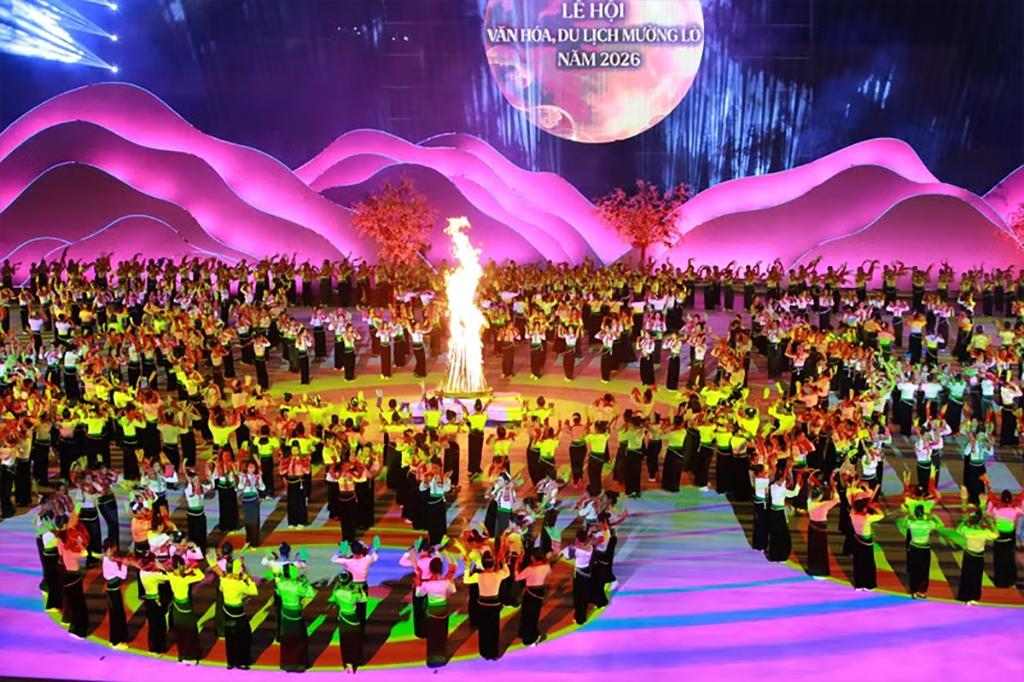
Muong Lo Festival 2026 opens with grand Xoe dance performance
Preserving traditional sedge-thatch houses in Ninh Binh