
Chairman of Ninh Binh Provincial People’s Committee inspects progress of key transport projects
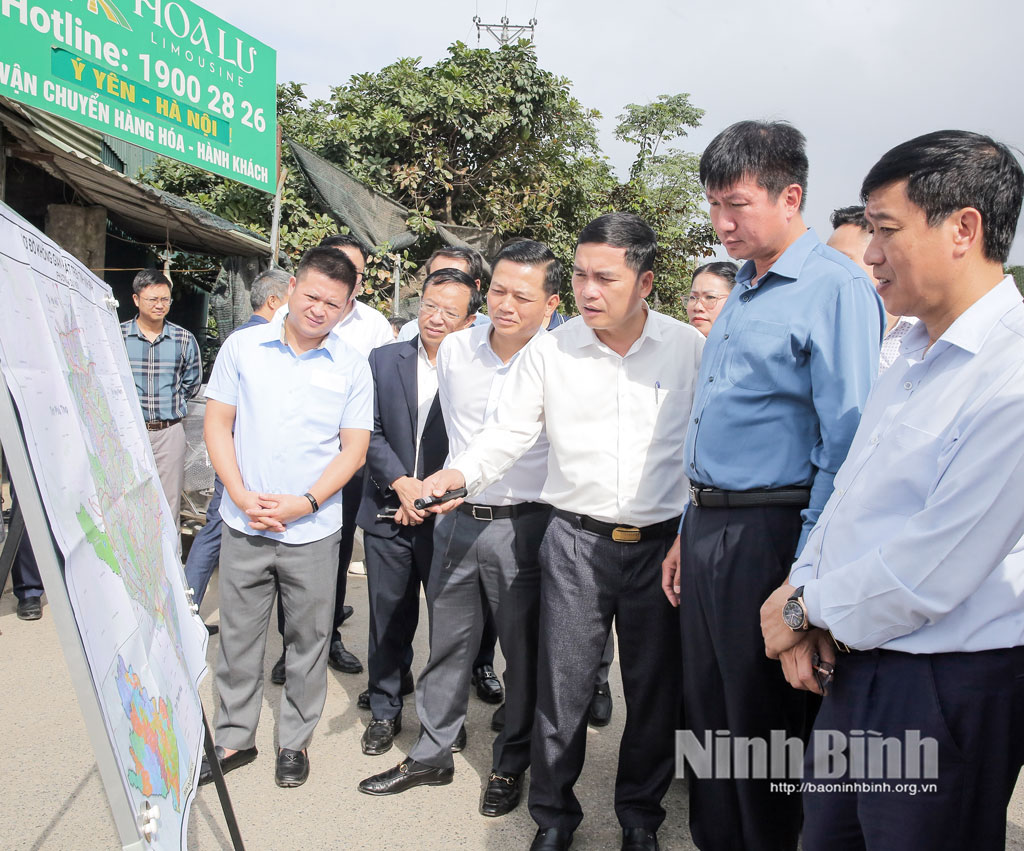
The inspection aimed to promptly assess the situation, resolve difficulties and obstacles, thereby accelerating the progress of investment in transport infrastructure construction and creating momentum for the province's socio-economic development in the new phase.
During the trip, Tuan and the delegation directly inspected the East-West road and the plan to extend this road to connect with Ho Chi Minh Highway in Phu Tho province. This is a crucial transport axis for strengthening inter-regional connectivity, expanding development space, and facilitating the flow of goods and passengers.
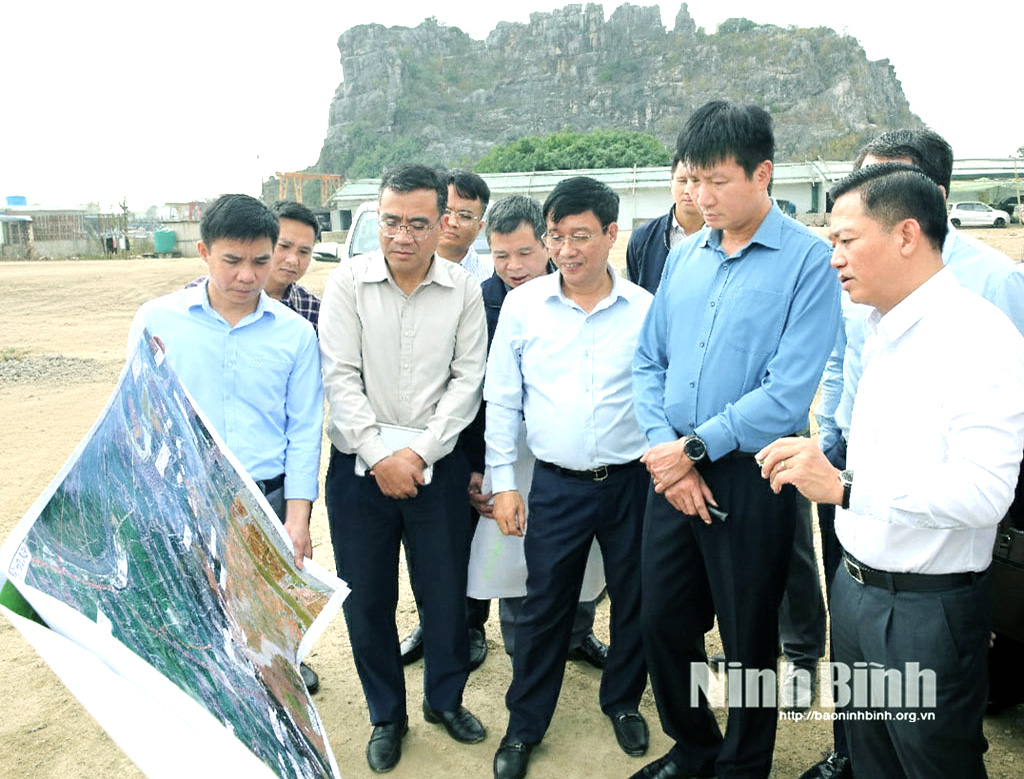
In addition, the delegation also surveyed several related connecting projects such as: the construction, upgrading, and expansion of DT.477 road; the construction project of Hoang Long bridge and access roads on DT.477C route; and the road connecting the Kenh Ga - Van Trinh tourist road with the East-West road.
Next, the delegation inspected the Ninh Binh Hai Phong Expressway Project (CT.08), which is being invested in under the public investment model.
Here, the delegation heard a detailed report on the construction progress, the land clearance situation, and the difficulties and obstacles encountered during the project implementation. Along with the expressway, important connecting projects such as provincial road DT.483B and provincial road DT.481, connecting national highways with the Ninh Binh Hai Phong Expressway, were also included in the inspection and evaluation.
At the Cao Bo interchange area, the delegation heard a report on the construction progress of the Ninh Binh province's socio-economic development axis road (Hoa Lu Nam Dinh); the Thanh Liem Cao Bo road (T4 axis); and the road connecting Hoa Lu with Longitudinal Axis 07. The delegation reviewed the construction project of the bridge over the Day River and the connecting road between National Highway 1A and the Longitudinal Axis 07.
In addition, relevant units reported on the land clearance work for the North-South high-speed railway project and the province's transport system development orientation in the coming period.
The delegation also conducted a site inspection at Dong Giao intersection the intersection between the Eastern North-South Expressway (CT.01) and Hoa Lu Boulevard.
This is a crucial intersection, connecting the provincial centre with the national arterial road, contributing to the development of urban areas, services, and tourism.
After the site inspection and hearing reports from investors and construction units, Tuan emphasised that the ongoing transport projects are of particular importance, ensuring synchronous connectivity for new Ninh Binh province, while also creating a foundation for attracting investment and sustainable socio-economic development.
Therefore, investors, departments, and relevant localities need to take decisive action, focus intensely, and accelerate the implementation progress to complete and put the projects into operation as soon as possible, he said.
The official affirmed that developing a synchronous and modern transport infrastructure, prioritising key transport projects and inter-regional connectivity projects, is one of the three strategic breakthroughs identified in the Resolution of the 1st Provincial Party Congress for the 2025-2030 term. Delays in progress not only affect the overall development goals but also directly impact the efficiency of public investment capital utilization.
The Chairman requested the Project Management Boards and relevant departments to coordinate closely and urgently complete investment procedures, accelerate the approval of projects, technical designs, and construction drawings. Local authorities need to focus intensely on land clearance, proactively coordinating with investors to promptly resolve any arising obstacles and create favorable conditions for construction.
Departments and agencies should strengthen coordination with project management boards in resolving difficulties related to land clearance, construction materials, and organising construction efficiently to ensure project progress and quality, Tuan noted.
Units should focus on verifying completed work, urgently accelerating the disbursement of public investment funds, and completing targets and plans as required by the Government, he stressed./.

Tin cùng chuyên mục
Awards ceremony convened for sixth Party ideology writing contest
Top Vietnamese leader hosts banquet in honour of Swiss President

16th National Assembly commences second session
FAO honours 10 prominent Vietnamese women in agriculture, rural development
Ninh Binh’s delegation attends “Meet Korea 2026” plenary conference