
A “golden year” for archaeological findings in Ninh Binh
Den Citadel part of Hoa Lu ancient capital
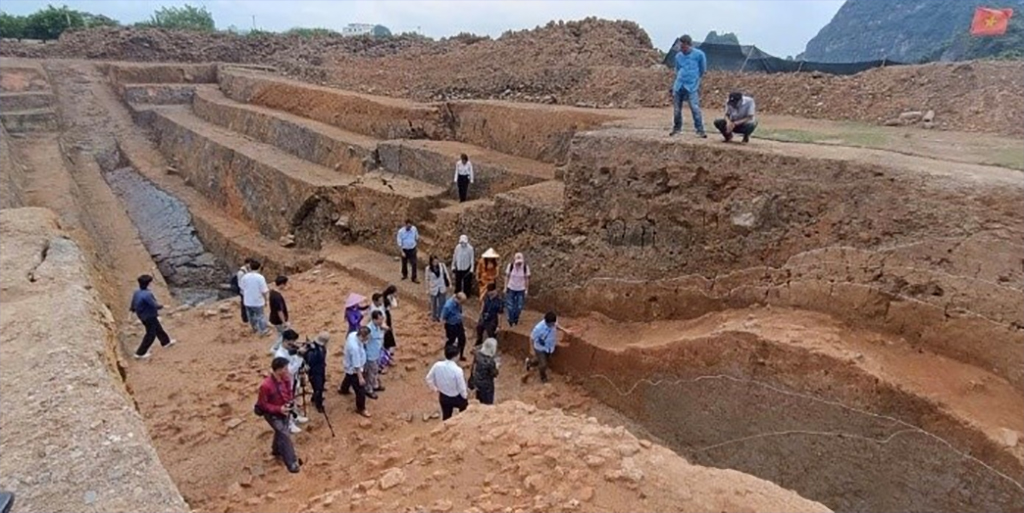
A four-month archaeological excavation of Den Citadel wall, part of the Hoa Lu ancient capital, was conducted by the Ninh Bình Provincial Department of Culture and Tourism in collaboration with the Institute of Archaeology from March 15 to June 30, 2025, in Chi Phong village, Truong Yen commune, Hoa Lu city (now Tay Hoa Lu ward), covering an area of 600 sq.m.
After nearly four months of excavation, with numerous discoveries, scientists have confirmed that the construction techniques of the Hoa Lu ancient citadel date back to the 10th century.

The wall was built on a relatively weak, marshy foundation, thus employing techniques such as spreading plant stems and reinforcing it with wooden beams combined with piles to prevent erosion.
The wall was built in a semicircular or nearly trapezoidal shape, with the outer slope usually steeper than the inner slope. Simultaneously, all excavation pits have been digitised using 3D scanning technology, serving research and reconstruction in subsequent stages.
This result, combined with previous excavations at the East Wall (1969), the exploration of the Den Wall (2018), and the emergency excavation of the Northeast Wall (2024), has contributed to a clearer understanding of the appearance of Hoa Lu Capital under the Dinh and early Le Dynasties in the 10th century.
Traces of trade activities discovered through the excavation of Ba Ngo Pagoda
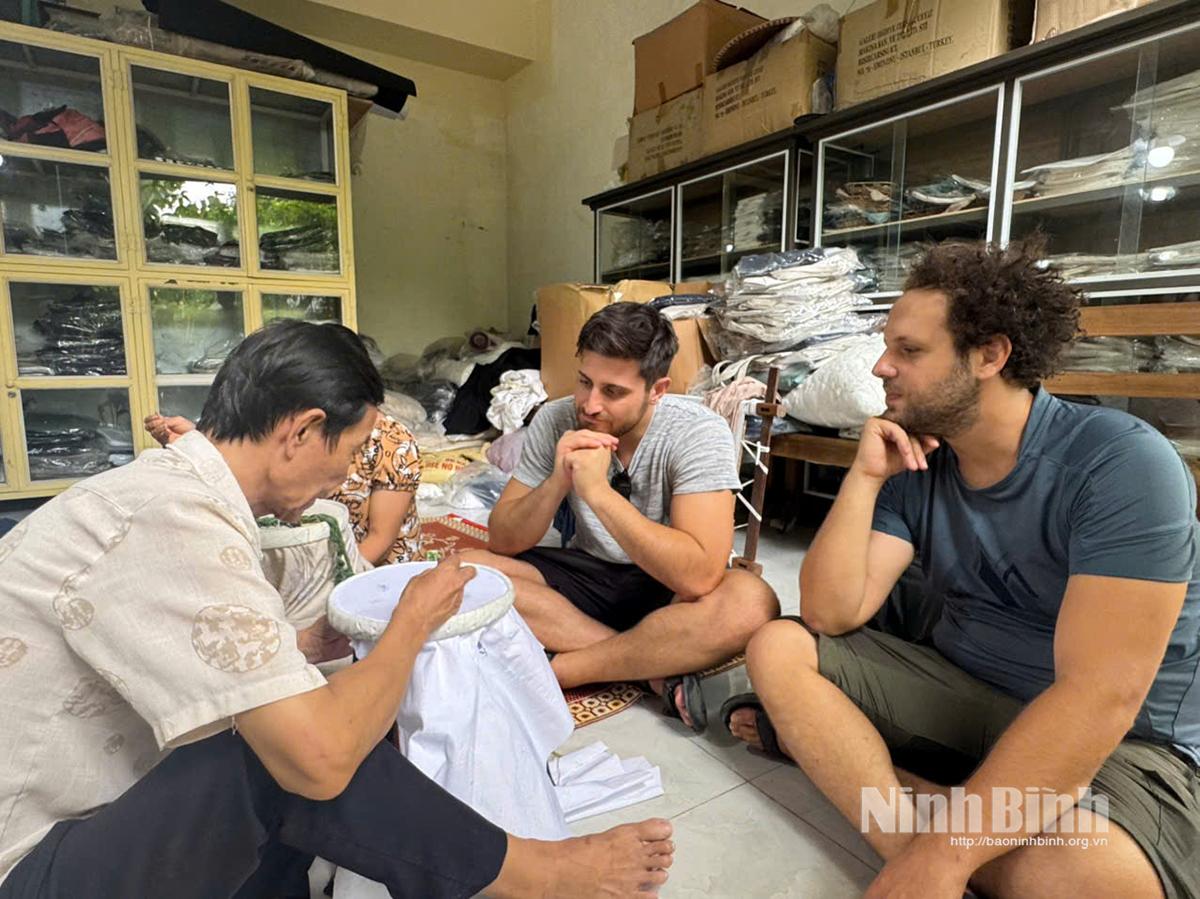
Following this, from May 2 to June 30, 2025, the Department of Culture and Sports, in coordination with the Institute of Archaeology, the Institute of History, and Trent University (Canada), conducted archaeological exploration and excavation in the area of Ba Ngo Pagoda in Truong Xuan village, Truong Yen commune, Hoa Lu city (now Tay Hoa Lu ward), covering an area of 32 sq.m.
Scientists have recovered thousands of artifacts, including pottery, stoneware, bricks, tiles, iron slag, animal bones, and plant specimens. Initial findings reveal numerous layers of architecture and artifacts dating from the Dinh and early Le dynasties, showcasing a diverse and colorful picture of the daily life of the ancient Hoa Lu inhabitants.
These artifacts are important documents providing valuable information for researchers and historians to deepen their understanding of the scientific, cultural, historical, and social values of the ancient capital of Hoa Lu in the nation's history.
Domestic and international experts generally agreed that the archaeological excavation of the Ba Ngo Pagoda area has revealed a complex site with many types of daily activities of the Hoa Lu inhabitants more than a thousand years ago. In particular, there are traces of vibrant trade and commerce.
Man Bac site: Special discoveries
In addition, from April 22 to June 29, 2025, the Ninh Binh Provincial Department of Culture and Sports, in coordination with the University of Social Sciences and Humanities, conducted excavations at the Man Bac site in Bach Lien village, Yen Thanh commune, Yen Mo district (now Dong Thai commune), covering an area of 196 sq.m.
The excavation revealed three cultural layers with two consecutive stages of development on a stratum nearly 2 metres thick.
Within the cultural layer, several tombs, hearths, large piles of hearth waste, black soil pits, and post pits were discovered.
The artifacts recovered were diverse in type and abundant in quantity, made of materials such as stone, pottery, bone, and mollusk shells. Notably, there were fragments possibly of jadeite (ancient jade stone artifact), artifacts made from clam shells possibly of a type of "bich," and tools made from seashells.
Tools, weapons, jewelry made from mollusk shells and bones, and pottery with beautiful decorative patterns were found.
Excavation results showed that Man Bac is a residential and burial site, encompassing two early and late stages of development, dating back 3,500-4,000 years.
The discoveries at the Man Bac site are of particular importance in studying the history of habitation and the material and spiritual life of ancient inhabitants in Ninh Binh province.
The excavation pit has also been scanned in 3D to facilitate the construction of an on-site museum in the future.
A representative of the Ninh Binh Provincial Department of Culture and Sports affirmed that the "golden" discoveries from archaeological excavations in 2025 will be a valuable source of information for cultural and historical research, preservation, and promotion of heritage values, while also further boosting tourism development in the future./.
Tin cùng chuyên mục


Muong Lo Festival 2026 opens with grand Xoe dance performance

Preserving traditional sedge-thatch houses in Ninh Binh