
Orientation for sustainable collective economic development for the 2026 2030 period
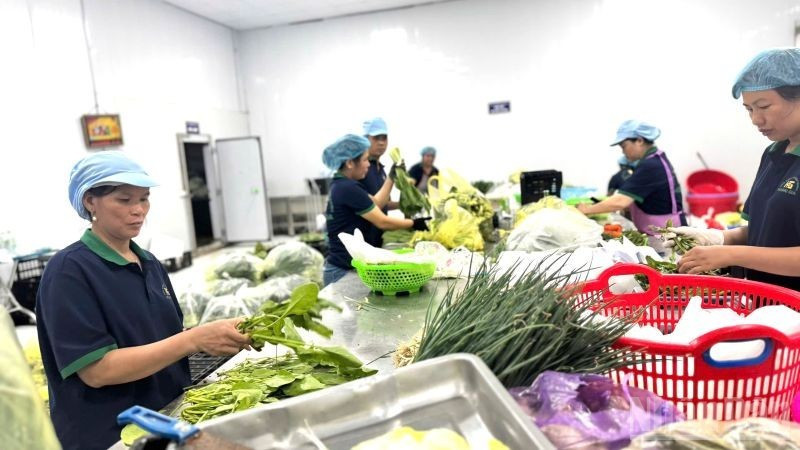
This fact also requires cooperatives to promote digital transformation, strengthen management capacity, and build professional and modern production and business models.
The target set for 2030 is that the whole country will have about 140,000 cooperative groups with 2 million members and 45,000 cooperatives with 8 million members; the whole country will have 5,000 cooperatives and 500 cooperative groups applying high technology in agricultural production and consumption, and implementing traceability for agricultural products.
By the end of 2025, the whole country had 35,041 cooperatives
Report No. 768/BC-BTC dated December 12, 2025, by the Ministry of Finance on the implementation of the Plan for Collective and Cooperative Economic Development for the 2021 2025 period and the orientation for the plan for the 2026 2030 period, clearly states that in the complex developing situation of the global and domestic economies, the collective economic and cooperative sector has continued to gradually affirm its important role in the economy, showing clear qualitative improvements and making positive contributions to socio-economic development, especially in rural areas.
According to preliminary statistics as of the end of 2025, the whole country had 35,041 cooperatives, meeting the set plan targets; the total number of cooperative members reached nearly 6 million people; there were 164 cooperative unions with more than 1 million members nationwide. The quality of cooperative operations has been improved, with 78.1% rated as fairly good or good, exceeding the planned target. Average revenue per cooperative reached about 4.56 billion VND per year, with average profit of 421 million VND per cooperative per year, an increase of 34% compared with 2020. The average income of regular workers in cooperatives reached about 64 million VND per person per year, up nearly 25% compared with the beginning of the period.
The contingent of cooperative management officials has made clear progress in terms of qualifications and governance capacity. By 2025, the whole country had nearly 136,000 cooperative managers, of whom 25.5% held college or university degrees or higher. Many cooperatives have proactively renewed management methods, applied digital technology, and enhanced transparency and efficiency in production and business operations.
The collective economy continues to play a core role in agricultural development and new rural development, with about 23,455 cooperatives operating in the agricultural sector. Nearly 40% of agricultural cooperatives participate in value chain linkages; thousands of cooperatives have taken part in the One Commune One Product (OCOP) Programme, applied high technology, and gradually implemented digital transformation. Non-agricultural cooperatives in fields of industry, trade, services, construction, transport, and credit have also developed with diverse models and scales. Many of them are linked to community tourism, the environment, logistics and e-commerce.
The collective economy undergoes qualitative transformation, creating a foundation for sustainable development in the 2026 2030 period
According to Deputy Minister of Finance Nguyen Duc Tam, during the 2026 2030 period, the international situation will continue to be unpredictable but will also open up new opportunities thanks to the Fourth Industrial Revolution.
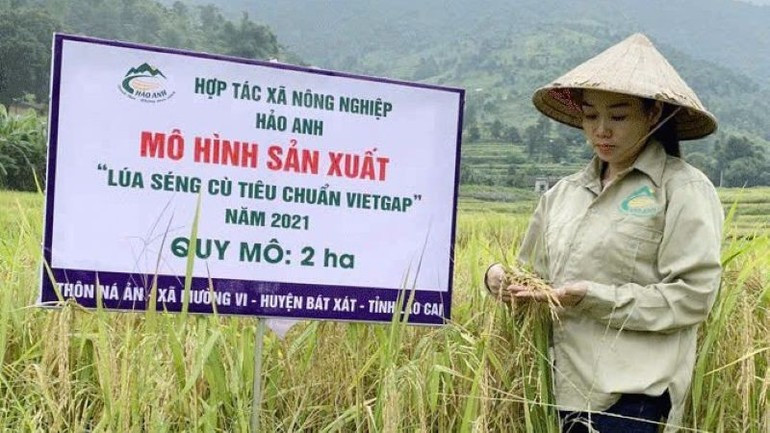 An effective production model of a cooperative in former Lao Cai Province, now Yen Bai Province. (Photo: NDO)
Also according to Deputy Minister Nguyen Duc Tam, based on a review of the 2021 2025 period, the development plan for the 2026 2030 period is defined with a strong orientation towards innovation in quality, efficiency and sustainability; developing new-style cooperatives that operate in line with their true nature, placing members at the centre, closely linked to the market and value chains; and moving towards modern, green and inclusive models.
The Ministry of Finance has proposed seven key groups of solutions, including: improving institutions and policies; enhancing the effectiveness of state management; developing cooperatives and cooperative unions linked to value chains; supporting access to land, capital, credit, and science and technology; promoting digital transformation, the green economy and the circular economy; improving the quality of human resources; and renewing communication work and replicating effective models.
It can be seen that, in the complex fluctuations of the global and domestic economies, the collective economic and cooperative sector continues to gradually affirm its important role in the economy, showing clear qualitative improvements and making positive contributions to socio-economic development, especially in rural areas.

Tin cùng chuyên mục


Awards ceremony convened for sixth Party ideology writing contest

Top Vietnamese leader hosts banquet in honour of Swiss President

16th National Assembly commences second session

FAO honours 10 prominent Vietnamese women in agriculture, rural development

Ninh Binh’s delegation attends “Meet Korea 2026” plenary conference